Blog

  • The Journey of Ecuadorian Cacao to Becoming Known as the Golden Bean: CORA Tells Its Story

    The Journey of Ecuadorian Cacao to Becoming Known as the Golden Bean: CORA Tells Its Story

    Before becoming chocolate, cacao was already part of the history of our land and of the people who learned to cultivate it generation after generation. Its story began among trees, communities, and fruits that held within them seeds capable of traveling across the world.

    Over time, Ecuadorian cacao went from being part of the lives of ancient populations to becoming one of the great driving forces of the country’s economy. Its value became so significant that it earned a name that still carries part of that history today: the Golden Bean, or Pepa de Oro. But to understand why such a small seed came to represent so much, we have to return to the beginning: to the land, to the people who cultivated it, and to an Ecuador whose history can also be told through cacao.

    A Story That Began Long Before Chocolate

    Ecuador’s relationship with cacao did not begin with the first chocolate factories. It goes back much further. Archaeological evidence found at the Santa Ana–La Florida site in Palanda, Zamora Chinchipe, associated with the Mayo-Chinchipe culture, reveals the domestication and use of cacao approximately 5,300 years ago, long before chocolate existed as we know it today.

    Thinking about this history changes the way we look at a chocolate bar. Cacao did not arrive in Ecuador and then become part of our identity: it had already been present in this territory for thousands of years. Over time, its cultivation expanded and knowledge surrounding the plant was passed down through generations. Each region learned to understand its rhythms: when to harvest, how to care for the pods, and how to handle the beans once the fruit was opened. Part of that knowledge remains present in cacao production today.
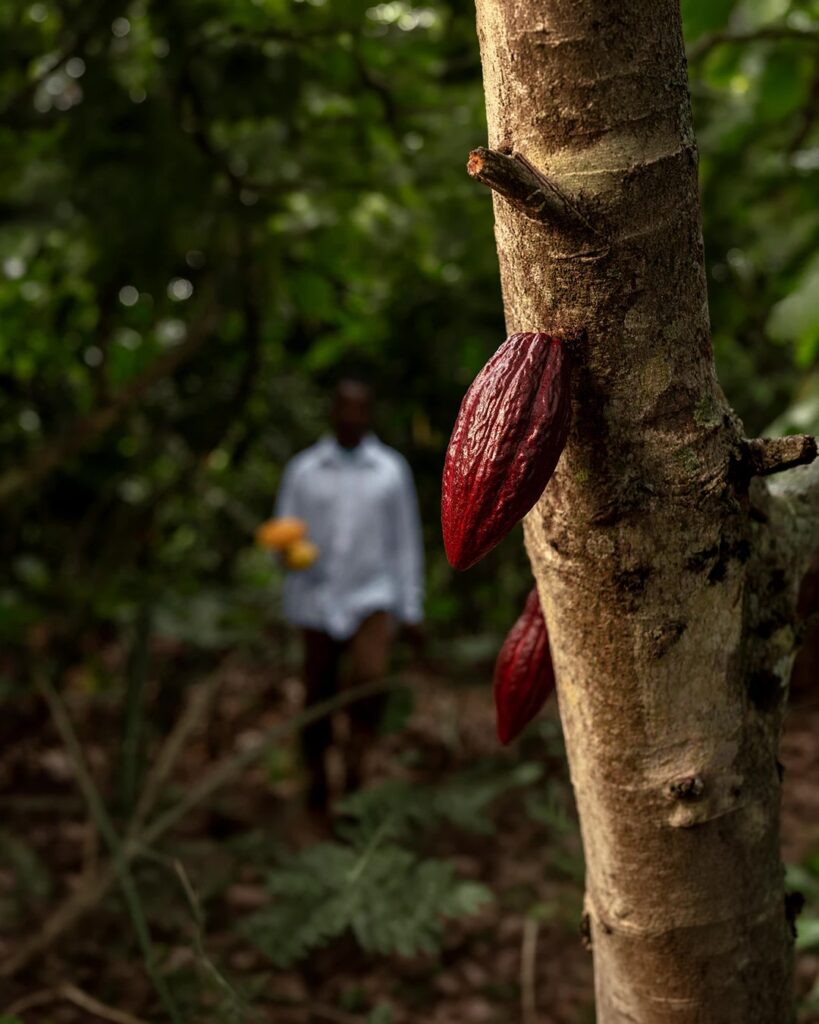
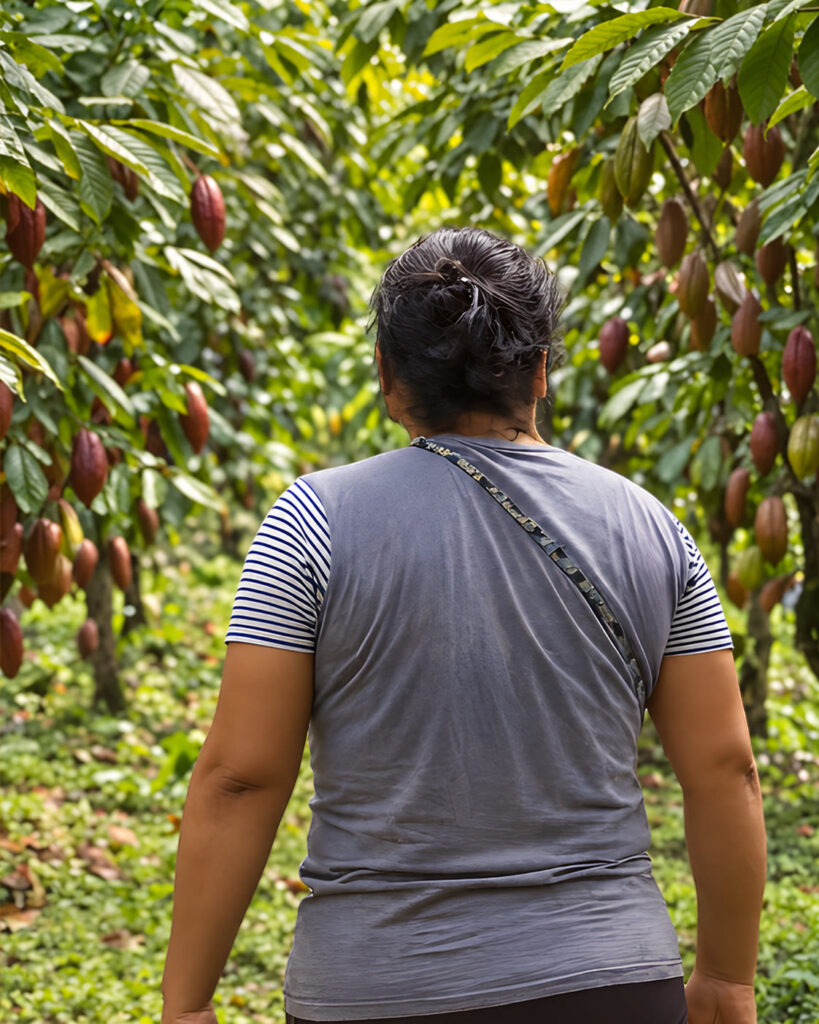
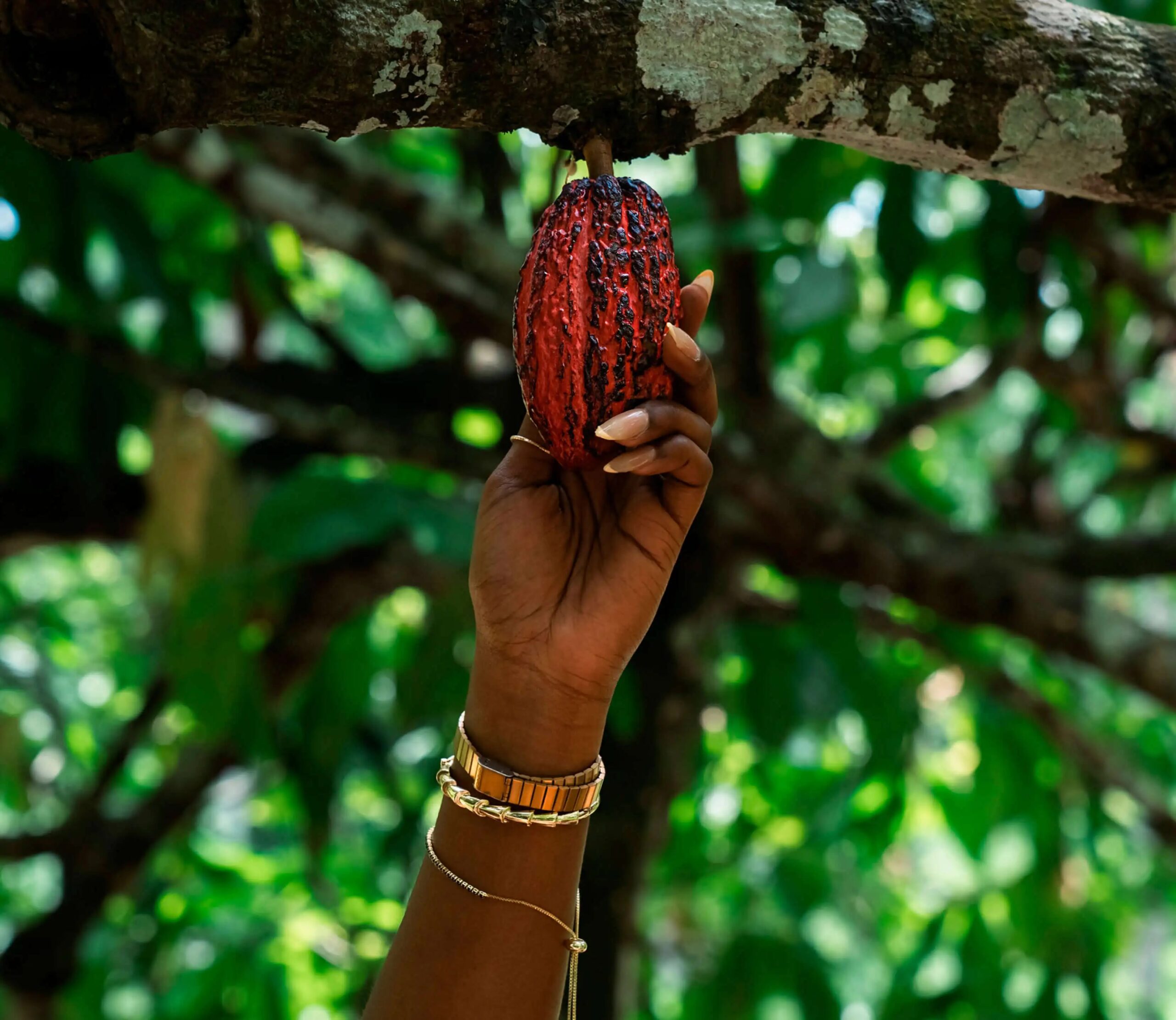
    Mazorca de cacao creciendo en un árbol de cacao en Ecuador

    From Our Land to Other Parts of the World

    Over time, Ecuadorian cacao began to travel. During the colonial period, its production became increasingly important and began reaching markets beyond the territory we now know as Ecuador. Demand grew, and different cacao-producing areas along the Coast began to develop around this crop.

    Cacao no longer represented only a fruit of the land: it also became trade, work, and livelihood. Estates, trade routes, and cities grew around its production, while many people moved toward cacao-growing regions to take part in an activity that was beginning to transform the economy. Guayaquil took on a fundamental role as a departure point for cacao heading to international markets. In this way, every sack of cacao leaving the country carried more than beans: it carried a part of Ecuador.

    When Ecuadorian Cacao Became the Golden Bean

    Between the late nineteenth and early twentieth centuries, cacao experienced one of the most important periods in its history in Ecuador. Exports grew, placing the country among the major players in the international market, and by the end of the nineteenth century, Ecuador had become one of the world’s leading cacao exporters.

    It was during this period that a name still associated with Ecuadorian cacao today gained strength: the Golden Bean, or Pepa de Oro. Its value was not limited to the fruit itself, but also to everything it set in motion around it. Cacao generated exports, trade, employment, and resources for a country that was becoming increasingly connected to international markets. It also helped drive different economic activities and contributed to the transformation of entire cities and regions.

    A small seed had come to occupy an enormous place in Ecuadorian life. That is why talking about the Golden Bean does not simply mean remembering a period of prosperity, but also a time when an important part of the country’s development followed the path of cacao.

    A Story Also Built Through Work

    The great moments in cacao history are often told through numbers, exports, and markets, but behind all of them there have always been people. People who planted and harvested, who knew when a pod was ready, who removed its seeds, guided the fermentation process, and spread the cacao out to dry before it continued its journey.
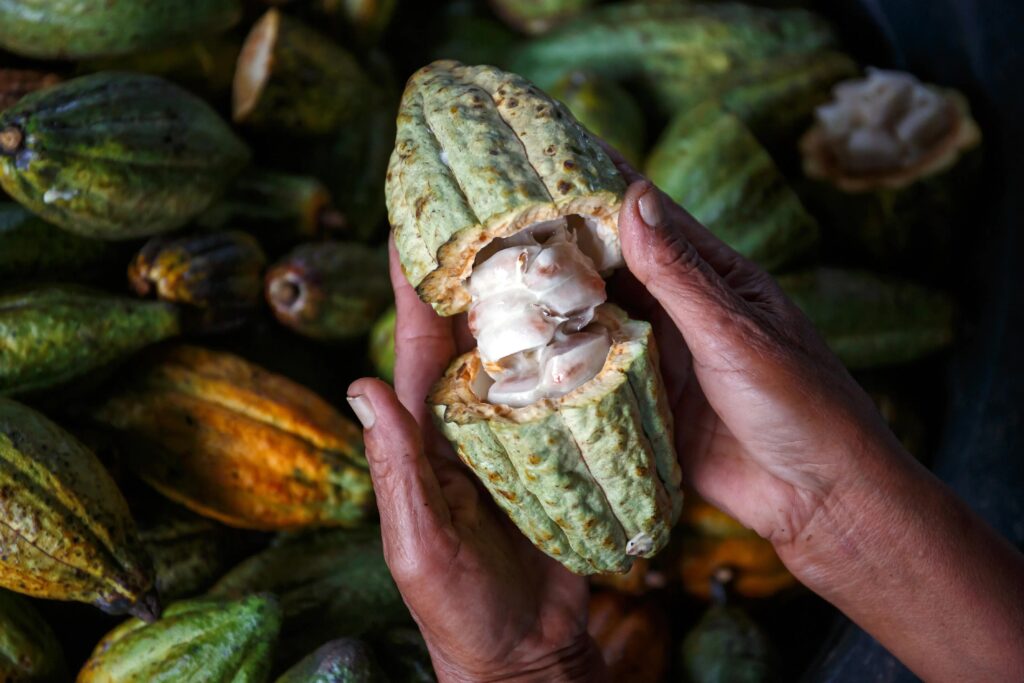
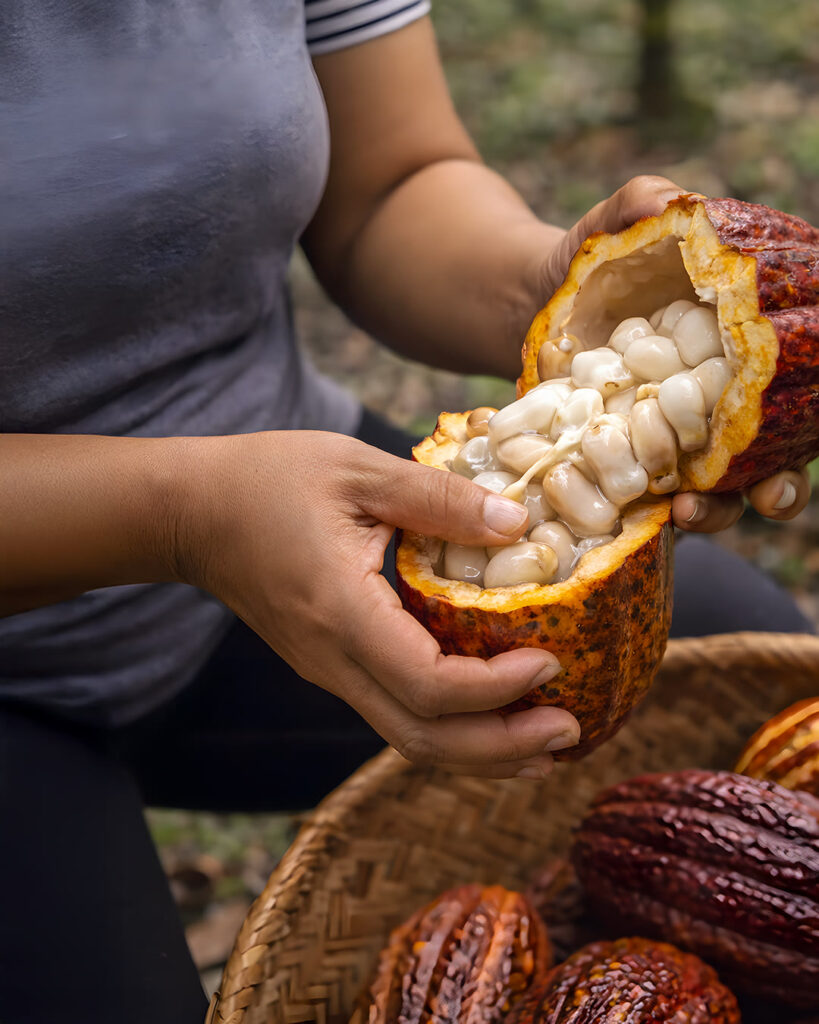
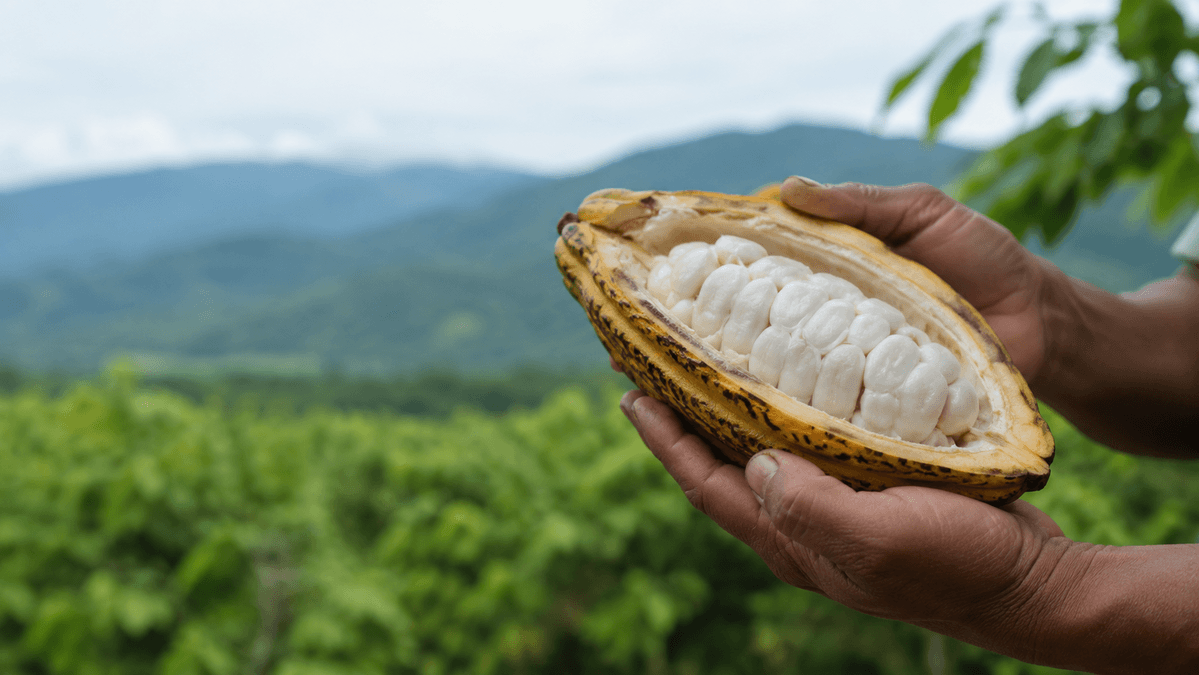
    Manos abriendo una mazorca de cacao ecuatoriano durante la cosecha

    The story of the Golden Bean was also built in the fields, and that remains fundamental today. Through our journey across cacao-growing regions, we have had the opportunity to meet producers, communities, and people who care for cacao long before it reaches our hands as chocolate. That is why, when we tell its story, we also want to tell the stories of those who continue to make it possible.

    You can learn more about them in our article on women cocoa farmers in Ecuador: the hands behind our chocolate.

    The Golden Bean Also Faced Difficult Times

    No story that stretches across so many years remains unchanged. After decades of growth, Ecuadorian cacao also went through difficult periods. Beginning with World War I in 1914, and especially around 1920, falling international prices, growing competition from other producing countries, and diseases such as monilia and witches’ broom began to weaken Ecuador’s great cacao boom. In the years that followed, production and exports lost some of the importance they had previously achieved.

    But cacao did not disappear. It remained on farms, within communities, and in the knowledge of those who continued cultivating it. Perhaps this is one of the most important parts of its story: the value of Ecuadorian cacao outlived its own economic boom, because what made it special never depended only on how much could be exported, but also on its origin, its characteristics, and the people who continued working with it.

    From Economic Value to the Value of Origin

    Over time, the conversation around Ecuadorian cacao began to change. It was no longer only about how much the country produced, but also about understanding what kind of cacao Ecuador produced and what made it different.

    Nacional cacao has historically been valued for its aromatic characteristics and its connection to fine flavor cacao. This recognition allows us to look at the Golden Bean from another perspective: its richness lies not only in what it once represented for the national economy, but also in its aromas, flavors, territories, and all the knowledge built around its cultivation.
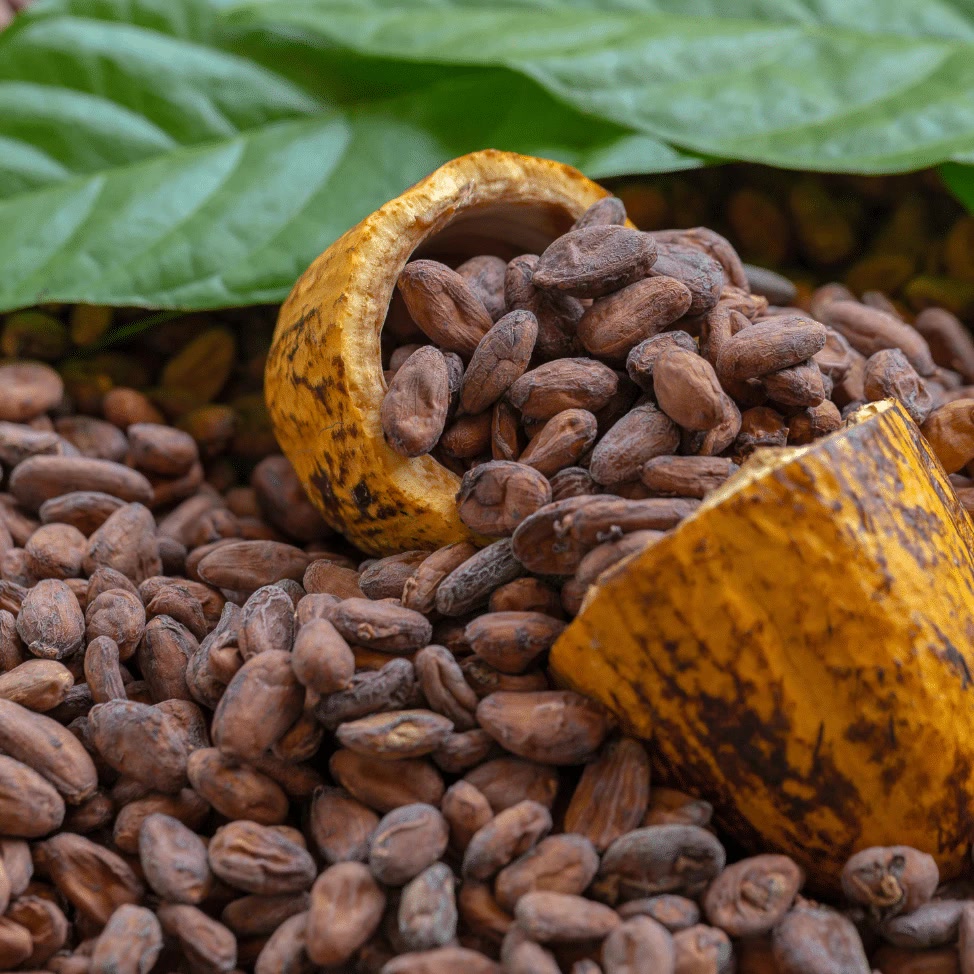
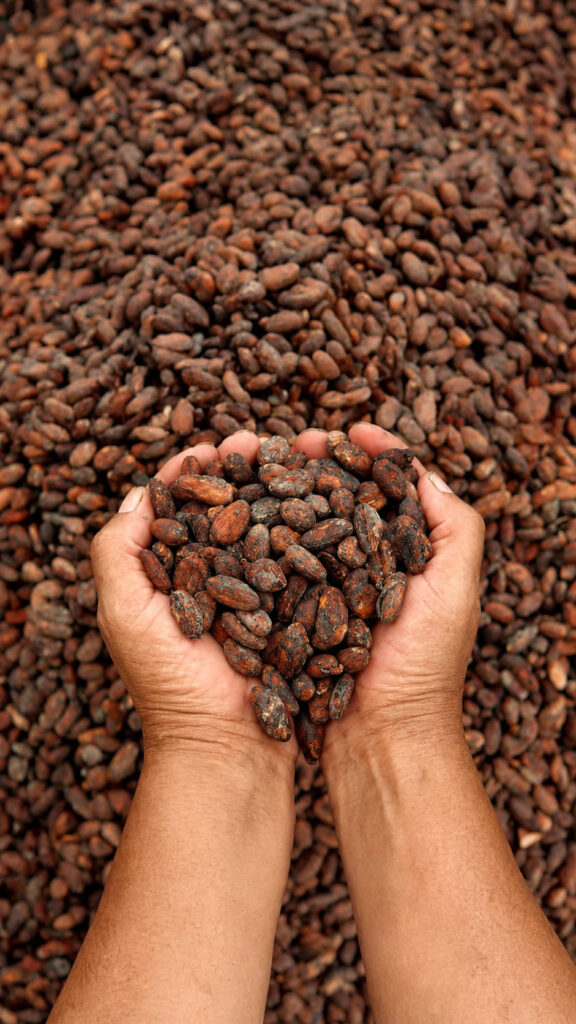
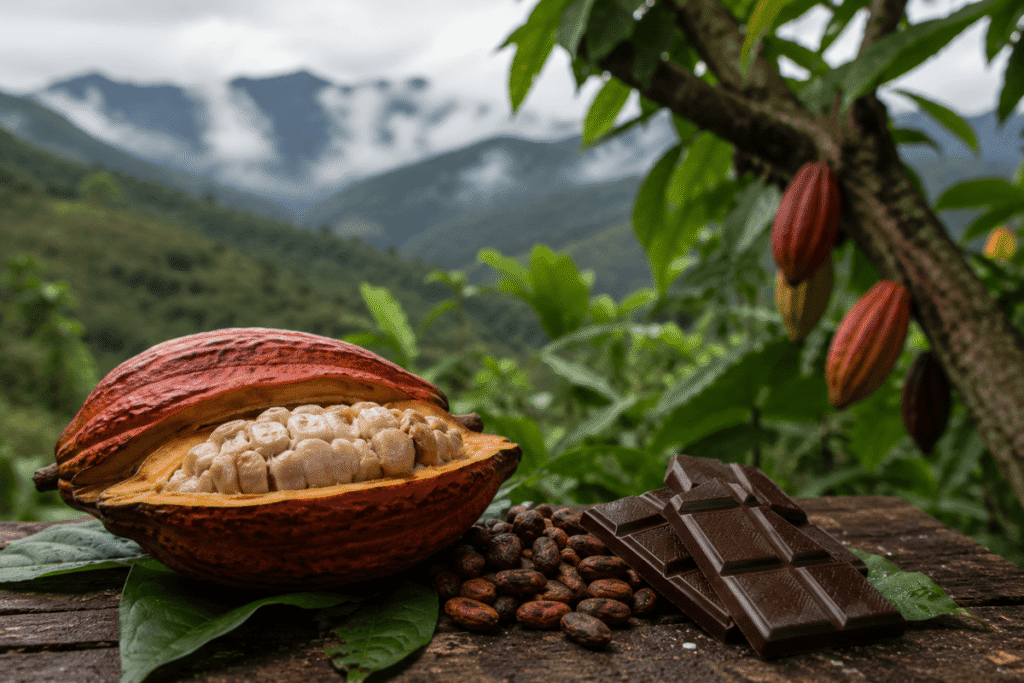
    Granos secos de cacao ecuatoriano junto a una mazorca

    Today, when we talk about Ecuadorian fine flavor cacao, we are still talking about a story that began thousands of years ago and continues to evolve.

    Cacao Still Has Stories to Tell

    Ecuadorian cacao today exists in a very different reality from that of the great estates of the late nineteenth century, but its journey continues. It grows in different regions of the country, passes through harvesting, fermentation, drying, and selection, and still depends on the knowledge of those who work with it from the very beginning.

    At CORA, we seek fine flavor cacao from certified cacao farms in Puerto Quito, Esmeraldas, and Tena, because we believe that knowing where our cacao comes from is also part of appreciating what we have. We do not want to focus only on the finished product. We want to understand what came before, which territory made it possible, who took part in its journey, and how we can recognize the work behind every bean.

    This perspective is also part of the way we understand sustainable chocolate in Ecuador and the work of small-scale producers.

    From the Golden Bean to a Chocolate Bar That Still Speaks of Ecuador

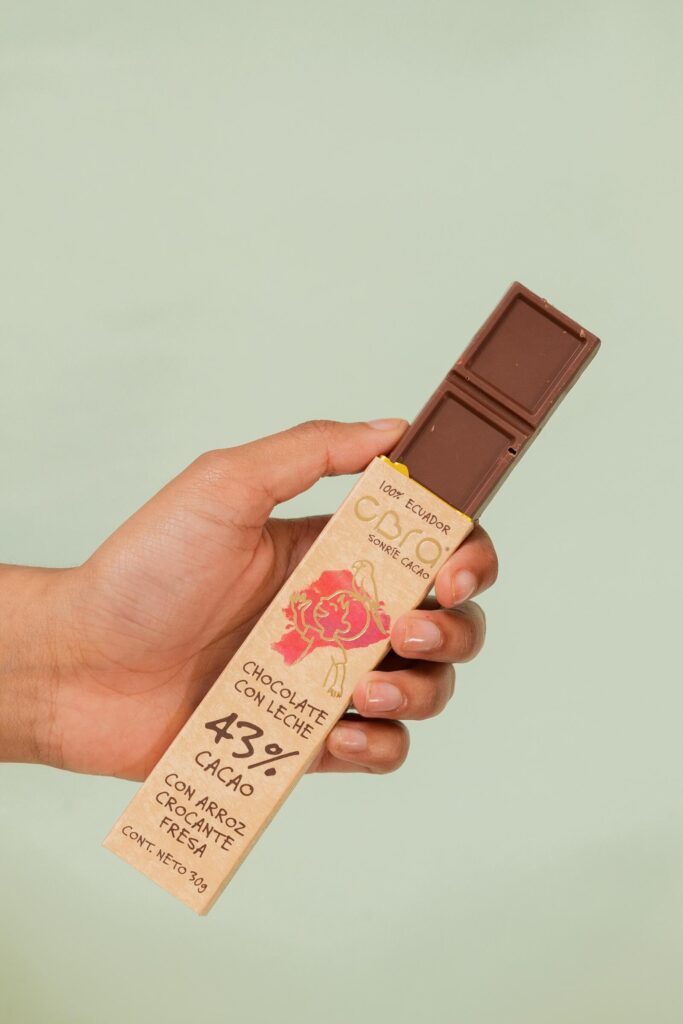
    Today, cacao can reach our hands in a very different way than it did one hundred or one thousand years ago. It can become a 43%, 55%, or 70% cacao bar, come together with ingredients that also speak of our land, or become part of a moment we want to share.

    But before all of that, the same starting point remains: cacao. A fruit that accompanied ancient populations of this territory, crossed oceans, helped move an important part of Ecuador’s economy, endured periods of crisis, and continues to grow thanks to producers and communities that keep its story alive.

    That is why, for us, calling cacao the Golden Bean means much more than remembering a time of prosperity. It means recognizing everything it has represented for Ecuador and everything it can still represent.

    Our Story Also Begins with a Cacao Pod

    At CORA, we believe that making Ecuadorian chocolate also means knowing where we come from. Every bar begins long before the packaging: it begins in a land that has known cacao for thousands of years, in the people who learned to cultivate it, in the generations that preserved that knowledge, and in those who continue making it possible for Ecuadorian cacao to find new ways of reaching the world.

    The Golden Bean does not belong only to the past. It continues to grow, continues to transform, and continues to tell a story that is deeply ours.

    At CORA, we are fortunate to continue that story through chocolate.
  • Women Cacao Farmers in Ecuador: The Hands Behind Our Chocolate

    Women Cacao Farmers in Ecuador: The Hands Behind Our Chocolate

    cacao percentage, or the ingredients that accompany it.

    But before reaching your hands, that bar has already traveled a long way.

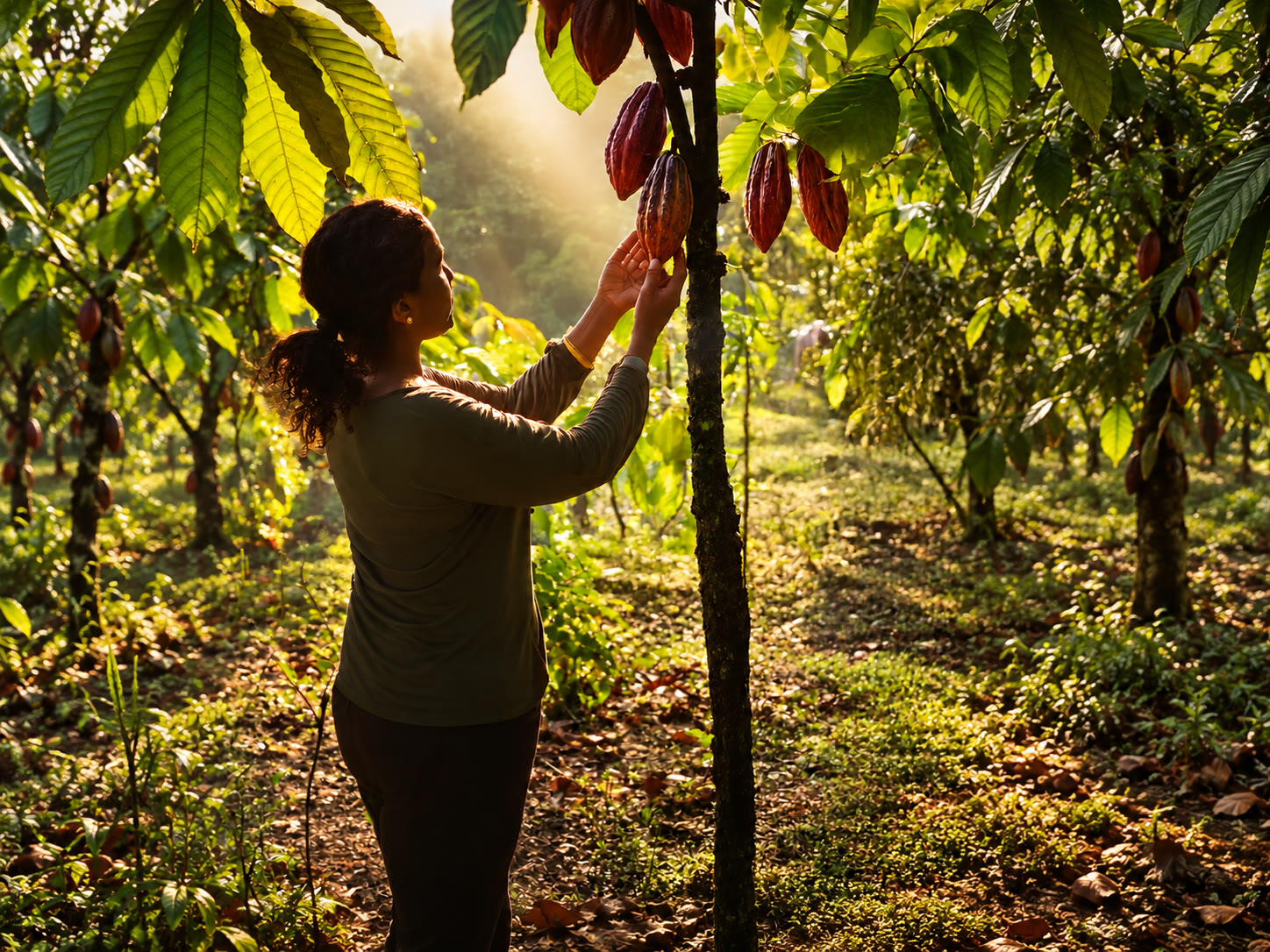
    That journey begins among cacao trees, with pods waiting for the right moment to be harvested and with people who know every stage of the process firsthand. In Ecuador, women cacao farmers take part in growing, harvesting, selecting, drying, and caring for the cacao that will eventually become chocolate.

    Understanding where it comes from also changes the way we enjoy it. Behind every bar are territories, communities, and Ecuadorian hands that make its story possible.

    It All Begins in the Soil

    Before becoming chocolate, cacao is the fruit of a tree that requires time, knowledge, and constant care.

    On the farms, every pod requires attention. Farmers need to recognize when it is ready and understand what the crop needs at each stage. It is knowledge learned through experience, passed down from generation to generation, and carried into every harvest.

    On many of these farms, cacao does not grow alone. It shares the land with plantain and other species that help protect the soil and allow the land to produce in different ways. This way of farming understands that the richness of the land also comes from everything that grows alongside it.

    The images we have captured together with these communities remind us of this first point of origin. Trees surrounded by vegetation, pods at different stages of ripeness, and producers who know the fruit they work with. This is where a story begins that we will later be able to taste.

    Women Who Know Cacao from Its Origin

    The work of women cacao farmers does not end when a pod is removed from the tree.

    Depending on each community and organization, their role may include cultivation, harvesting, fruit selection, opening the pods, handling the beans, drying, commercialization, or community organization. These are different tasks, connected by the knowledge and patience that every cacao bean requires.

    That is why Ecuadorian fine-flavor cacao cannot be explained only through its notes, aromas, or quality. It also tells the story of everything that happens before the bean is transformed into chocolate.

    Giving visibility to these women is not about idealizing work in the countryside, but about recognizing it and understanding that every agricultural product is supported by people who sustain its journey every day.

    When the Pod Opens, Another Part of the Story Begins

    Opening a cacao pod reveals a world we rarely imagine when looking at a finished chocolate bar. Inside are the seeds, covered in white pulp. There is still a long way to go before they resemble the chocolate we know.

    After harvesting, the way cacao is handled is just as important as how it is grown. Fermentation and drying help develop the characteristics of the bean and prepare it for the next stages. The beans are covered, carefully turned, and dried under conditions that require constant attention.

    In the footage we have captured in the field, we see fermentation boxes covered with jute, large surfaces filled with cacao drying in the open air, and people checking the beans again and again. They are simple scenes that reveal the time, skill, and patience behind every bite.

    From Esmeraldas to Tena, Cacao Continues to Find Hands

    In Esmeraldas, cacao’s journey also passes through collection centers, where the beans continue through selection, drying, and preparation before moving on to the next stage.

    There, we spoke with Roxana Arias, who closely accompanies this part of the process alongside the drying beds.

    Her work shows that the cacao chain does not exist only within the farms. The quality of a chocolate bar begins to take shape long before cacao enters a factory, through every step of care the bean receives and every person who accompanies it along the way.

    The journey also reaches Tena, in the Ecuadorian Amazon. There, cacao is part of production systems that maintain a close relationship with the forest, the community, and knowledge passed down from generation to generation.

    Together with Giovanny Grefa from the Kallari Association, we learned more about the work that supports producer families in the area. Kallari produces cacao under the Amazonian chakra system, a model in which cacao grows alongside different plants and crops and is closely connected to the preservation of Kichwa culture and the natural environment.

    This work is recognized through the Amazonian Chakra Seal, a Participatory Guarantee System that acknowledges the responsible practices of producer communities and is supported by the FAO and the Forest and Farm Facility.

    In these territories, growing cacao also sustains community, identity, and opportunities for families. It is a way of building both life and livelihoods from their own place of origin.

    Choosing Chocolate Also Means Looking at Its Story

    At Cora, we source fine-flavor cacao from certified cacao farms in Puerto Quito, Esmeraldas, and Tena. We care about knowing where our raw materials come from, following their traceability, and building responsible relationships with the environment and producer communities.

    Quality should not begin to be discussed only when cacao enters a factory. It is built from the soil, continues through harvesting, passes through fermentation, drying, and selection, and depends on the people present at every stage.

    The next time you have a Cora bar in front of you, look a little beyond the packaging. Its flavor comes from a cacao pod, from harvesting and drying, and from the hands that cared for the cacao so it could continue its journey.

    Fine-flavor cacao stands out for its flavor, aromas, and characteristics. But one of the most valuable parts of its story is also found in the hands that grow and care for it.

    Getting to know Ecuador’s women cacao farmers means discovering a little more about everything behind our chocolate.

    If you would like to continue discovering Cora’s origins, you can also read our article on what fine-flavor cacao is and why Ecuador is recognized worldwide, as well as our article on sustainable chocolate in Ecuador and small-scale producers.

  • Chocolate with Purpose: How One Choice Can Support Social and Environmental Causes

    Chocolate with Purpose: How One Choice Can Support Social and Environmental Causes

    Choosing a chocolate usually starts with flavor: the cocoa percentage, the ingredients, that combination we already know we’re going to enjoy.

    But behind every bar, there are decisions, people, and places that are also part of its story. Knowing where the cocoa comes from, who takes part in its production, and which causes a brand supports can change the way we see that product.

    At CORA, that perspective has been part of the brand from the beginning. Its purpose is connected to two causes: protecting wildlife alongside Jardín Alado and supporting women entrepreneurs alongside Corre La Voz.

    Learn more about CORA’s purpose and story: About CORA

    What Does Conscious Consumption Mean?

    Conscious consumption does not mean overcomplicating every purchase. It means paying a little more attention to what lies behind the products we bring home: where the ingredients come from, who takes part in their production, what values a brand represents, and which initiatives it supports.

    When it comes to chocolate, that question opens the door to many others. A chocolate bar begins long before it reaches a store: it starts with cocoa cultivation and continues through harvesting, fermentation, drying, and bean selection, before finally becoming chocolate.

    At CORA, this perspective is reflected in a supply chain that recognizes the work of the people behind the cocoa.

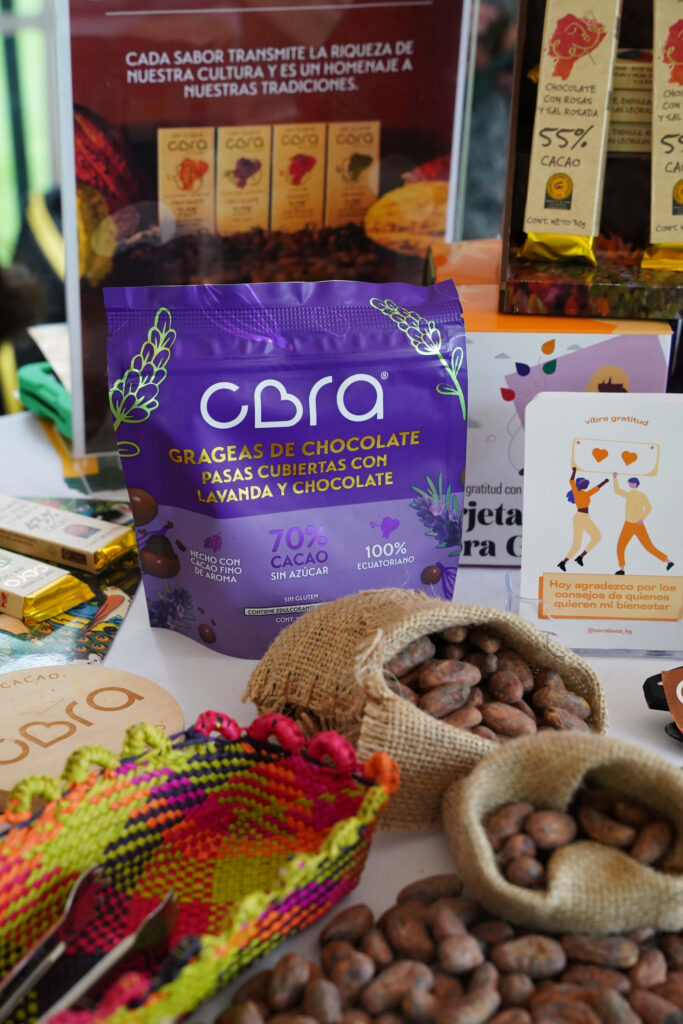
    stand de CORA + Vibra Gratitud de Corre La Voz

    Explore this part of the story in more depth: Sustainable Chocolate in Ecuador: How CORA Gives Back to Small Producers

    Chocolate with Purpose: Looking Beyond the Bar

    Good chocolate starts with good cocoa, but a brand’s identity is also shaped by the decisions it makes around that product.

    For CORA, Ecuadorian cocoa is part of that story — and so are the causes the brand has chosen to support: wildlife conservation and the empowerment of women entrepreneurs. Two different worlds that share something important: behind both are people and communities working every day to create change in their own spaces.

    Jardín Alado: A Cause That Protects Wildlife

    Ecuador has extraordinary biodiversity, and birds are an essential part of it. However, many wild animals arrive at rescue centers after going through situations that put their well-being at risk. Their recovery requires care, rehabilitation, and, when conditions allow, a return to their natural habitat.

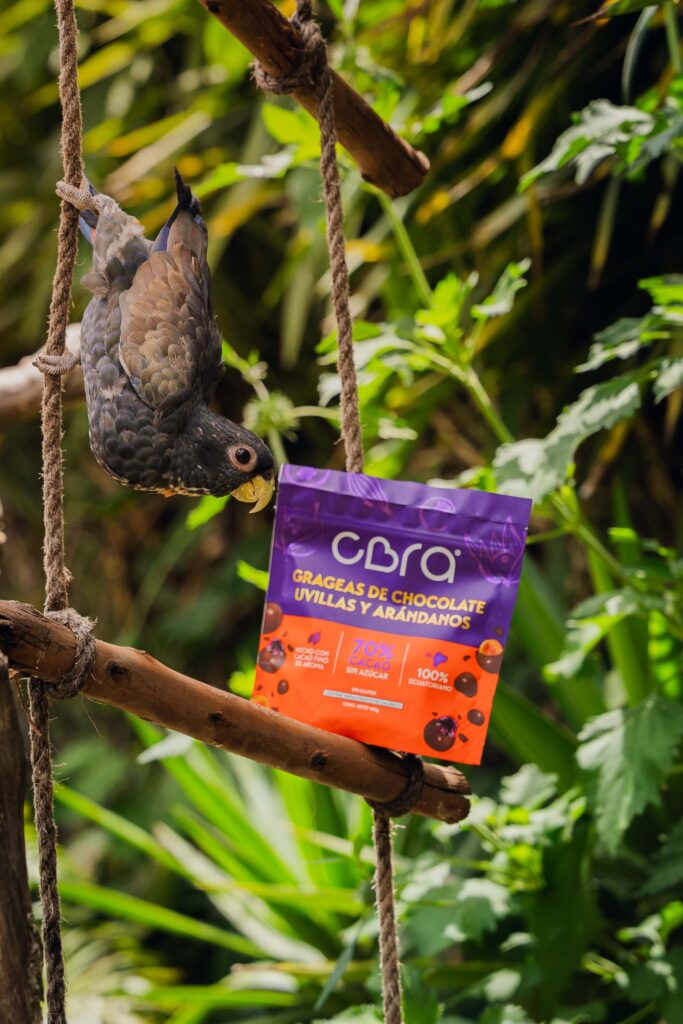
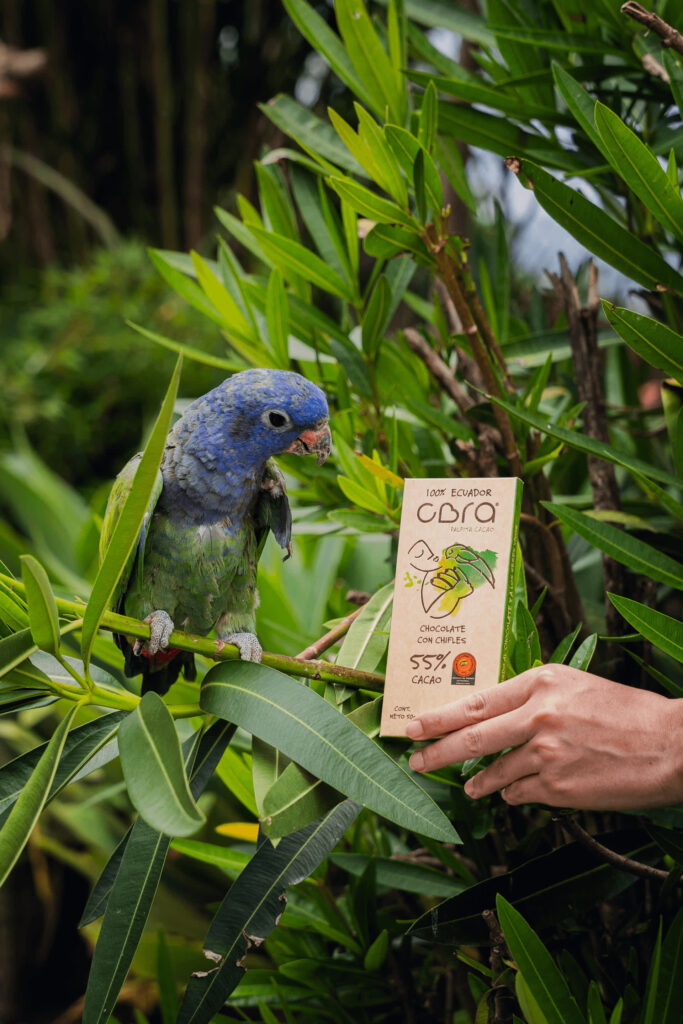
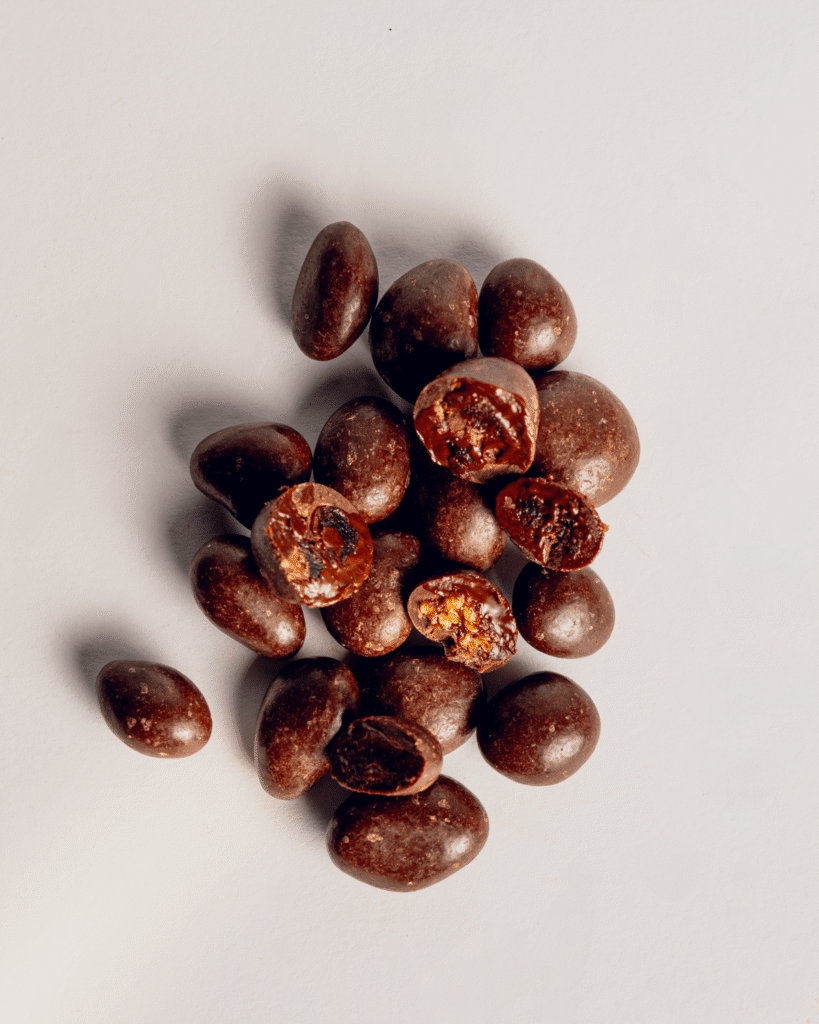
    Ave junto a grageas Cora

    Jardín Alado works precisely in this area: caring for and rehabilitating wild birds, while raising awareness about the importance of preserving them in the wild. For CORA, supporting this cause is a concrete way to contribute to the protection of Ecuador’s wildlife.

    Learn more about this work: Wildlife Conservation in Ecuador: How CORA Creates Impact Beyond Chocolate

    Corre La Voz: Supporting Women Who Are Building Their Own Paths

    Social impact also begins when someone finds a space to showcase what they do and connect with others who are on a similar journey.

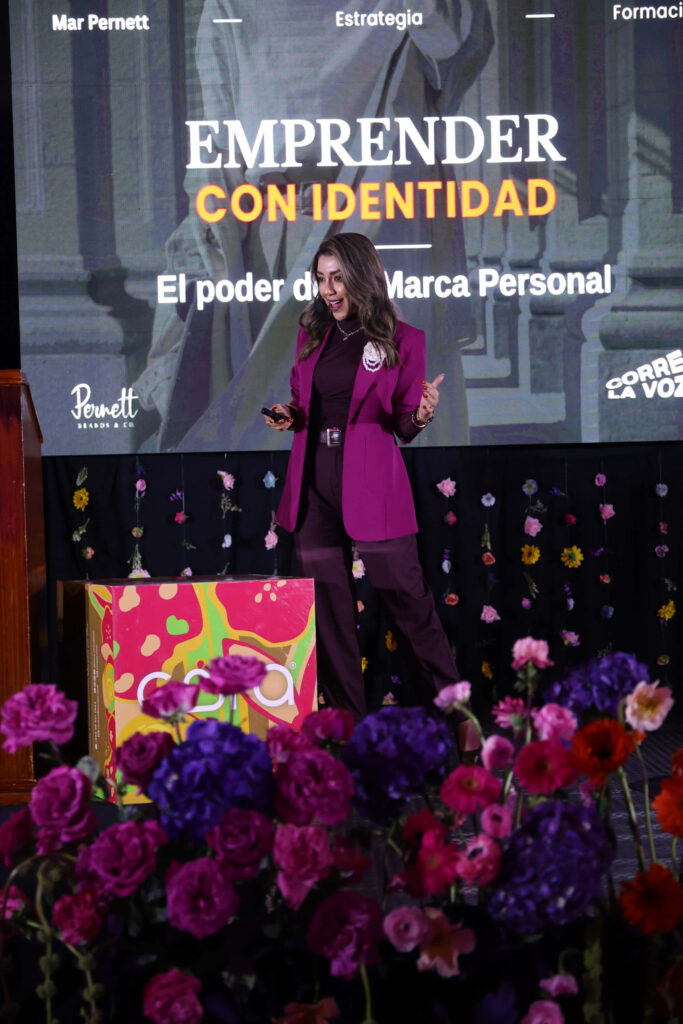
    Corre La Voz is a community focused on supporting, connecting, and giving visibility to women entrepreneurs through content, events, and initiatives that help different businesses gain exposure and continue growing.

    For CORA, supporting projects like this means recognizing the women who are creating brands, products, and services in Ecuador, while helping their stories reach a wider audience.

    Charla “Emprender con identidad” en evneto Corramos la Voz Juntas.

    Learn more about this relationship: Women’s Empowerment Initiatives: How CORA Creates Impact Through Chocolate

    Purpose, in Numbers

    A purpose becomes more meaningful when it is backed by concrete actions. At CORA, part of the brand’s revenue is allocated directly to the causes it supports:

    • 50% of the revenue goes to Jardín Alado to support the protection and rehabilitation of wild birds.
    • 20% goes to Corre La Voz to strengthen a community that supports and gives visibility to women entrepreneurs.

    This way, CORA’s connection to both initiatives goes beyond a message: it becomes a chocolate bar that links an everyday choice to social and environmental projects creating impact in Ecuador.

    Choosing Local Also Means Knowing What Lies Behind a Product

    Conscious consumption can start much closer to home than we imagine. Choosing Ecuadorian products means connecting with ingredients, traditions, and processes that originate within the country — and asking what stories exist behind them.

    In a chocolate bar, the origin of the cocoa can completely change the experience: climate, soil, harvesting, and post-harvest processes all shape its aromas and flavors. CORA works with Ecuadorian fine aroma cocoa, internationally recognized for the richness of its sensory profile.

    Discover what makes it different: What Is Fine Aroma Cocoa and Why Is Ecuador Recognized Worldwide?

    An Everyday Choice, Part of Something Bigger

    Buying a chocolate bar alone will not solve the challenges of wildlife conservation or the difficulties women face when building their own businesses. But we can choose to pay attention to the brands we support and the causes that are part of their purpose.

    Social and environmental causes do not depend on a single organization: they require collaboration. Jardín Alado protects and rehabilitates wildlife. Corre La Voz builds community around women entrepreneurs. Producers work with cocoa from its source. And CORA connects these stories through a product made in Ecuador — each contributing from its own place.

    What We Choose Also Says Something About What We Value

    The next time you have a chocolate bar in your hands, flavor will still be one of the main reasons you choose it — and that’s perfectly fine. But you can also look a little further: Where does the cocoa come from? Who is behind its production? What causes does the brand support?

    Asking those questions is also part of conscious consumption. Enjoying chocolate and knowing the story behind it do not have to be separate experiences. At CORA, every bar connects the flavor of Ecuadorian cocoa with the people, nature, and causes that are part of its story.

    Discover CORA’s cocoa percentages, flavors, and ingredients: Discover CORA Chocolates

    Because choosing chocolate can also mean choosing what we want to support.

  • The Importance of Cacao Percentage in a Chocolate Bar: How to Choose the Best Option

    The Importance of Cacao Percentage in a Chocolate Bar: How to Choose the Best Option

    When choosing a chocolate bar, one of the first details you will probably notice on the packaging is a percentage: 43%, 55%, 70% cacao, or even more.

    But what does that number actually mean? Does a higher percentage always mean better chocolate? How does it influence flavor, intensity, and the overall tasting experience?

    Understanding the cacao percentage can help you choose a chocolate that better suits your preferences while also helping you learn more about what goes into each bar.

    Because when it comes to chocolate, the number matters, but it does not tell the whole story.

    What Does the Cacao Percentage in a Chocolate Bar Mean?

    The cacao percentage indicates how much of the bar is made up of cacao-derived ingredients.

    For example, when a label says that a chocolate contains 70% cacao, it means that a significant portion of the bar comes from cacao, while the remaining percentage consists of other ingredients in the recipe, such as sweeteners or other components.

    This number can help you anticipate certain characteristics of the chocolate, especially its intensity, sweetness, and flavor profile.

    However, the percentage should not be considered on its own.

    Two bars with the same cacao percentage can offer completely different experiences depending on the origin of the beans, the production process, the ingredients used, and the overall formulation of the chocolate.

    Does More Cacao Mean Better Chocolate?

    Not necessarily.

    It is common to think that a chocolate bar with a higher cacao percentage is automatically better, but chocolate quality depends on many other factors.

    The percentage tells you how much cacao is present, but it does not necessarily tell you about:

    • The quality of the raw ingredients.
    • The origin of the cacao.
    • Its aromatic profile.
    • The fermentation and roasting process.
    • The ingredients paired with the cacao.
    • The overall balance of the recipe.

    A 55% cacao bar made with high-quality ingredients and a well-balanced formulation may offer a more enjoyable experience for some people than a bar with a higher percentage that does not match their preferences.

    So instead of simply looking for “the highest percentage,” the goal is to find the cacao percentage that best matches the way you enjoy chocolate.

    How Does Flavor Change Depending on the Cacao Percentage?

    As the cacao content increases, cacao generally becomes more prominent in the overall flavor experience.

    This can result in more intense chocolate, with less perceived sweetness and a greater opportunity to notice the cacao’s natural characteristics.

    43% Cacao Chocolate: A Softer Experience

    A 43% cacao bar can offer a softer, more delicate profile, where cacao shares the spotlight with the other ingredients in the recipe.

    It can be a good choice for those who:

    • Prefer less intense flavors.
    • Are starting to explore chocolate with a higher cacao content.
    • Enjoy smoother flavor profiles.
    • Want the ingredients paired with the cacao to also stand out.

    It is an approachable way to discover chocolate through a more balanced and gentle flavor profile.

    55% Cacao Chocolate: A Balanced Middle Ground

    With 55% cacao, the cacao begins to express itself more clearly while still maintaining a balance between intensity and sweetness.

    This percentage can be ideal for those who want to explore more defined flavors without reaching the stronger character of a 70% cacao bar.

    It can also be an interesting choice for discovering how additional ingredients interact with cacao that already has a more noticeable presence.

    70% Cacao Chocolate: Cacao Takes Center Stage

    In a 70% cacao chocolate bar, cacao plays a much more prominent role.

    This makes it easier to perceive different aromatic and flavor nuances, especially when the chocolate is made with cacao that has a distinctive sensory profile.

    Depending on the cacao’s origin, you may notice fruity, floral, roasted, citrus, or nutty notes.

    That is why a 70% bar does not necessarily have to taste simply “bitter.” High-quality cacao can offer a much more complex experience.

    Origin Also Changes What You Taste

    Cacao percentage is important, but there is another detail worth paying attention to: where the cacao comes from.

    Just like coffee or wine, the conditions in which cacao is grown can influence its characteristics.

    Climate, soil, cacao variety, and post-harvest processes all contribute to shaping its sensory profile.

    That is why two 70% chocolates made with cacao from different origins can taste completely different.

    One may reveal fruitier notes, while another may feel more floral, roasted, or intense.

    This diversity is especially interesting when it comes to Ecuadorian fine flavor cacao, known for the complexity of its aromas and flavors.

    Does the Cacao Percentage Determine How Much Sugar Is in a Bar?

    The cacao percentage can give you a clue about the composition of a chocolate bar, but it should not be used as the only indicator of how much sugar it contains.

    A bar with a higher cacao percentage usually leaves less room in the formulation for other ingredients, but every recipe is different.

    If you want to know exactly how much sugar a chocolate contains or what type of sweetener is used, it is best to check:

    The ingredient list: this tells you what was used to sweeten the bar.

    The nutrition facts: this shows the nutritional composition for a specific serving size.

    The claims on the packaging: these may indicate whether the chocolate is sugar-free, has no added sugar, or is made with a different type of sweetener.

    Cacao percentage is a useful tool for understanding chocolate, but it does not replace reading the label.

    So, What Cacao Percentage Should You Choose?

    There is no perfect percentage for everyone.

    The choice mainly depends on your personal preferences.

    If you prefer softer flavors, a 43% cacao bar can be a good place to start.

    If you are looking for a balance between intensity and smoothness, 55% cacao offers a middle ground where the character of the cacao becomes more noticeable.

    If you enjoy more intense flavors, a 70% cacao bar may be an excellent choice.

    You can also turn the decision into a small tasting experience: trying 43%, 55%, and 70% one after another can help you notice how your perception of cacao changes and which profiles you enjoy most.

    It Is Not All About Intensity

    Choosing a chocolate bar should not become a competition to find the highest number.

    A higher percentage may offer greater intensity, but a good chocolate experience depends on balance.

    The origin of the cacao, its quality, the texture of the bar, the additional ingredients, and the way they are combined all influence the final result.

    For example, a chocolate bar may include fruits, flowers, nuts, spices, or other ingredients that complement the cacao’s natural notes.

    In these cases, the percentage is part of the experience, but it does not define it completely.

    43%, 55%, or 70%: Discover Different Ways to Enjoy CORA

    At CORA, different cacao percentages make it possible to explore different ways of enjoying chocolate.

    A 43% cacao bar offers a softer experience, ideal for those who prefer a delicate and balanced profile.

    With 55% cacao, the cacao becomes more prominent and finds a middle ground between smoothness and intensity, allowing its characteristics to come through more clearly.

    On the other hand, 70% cacao bars offer a more intense experience, where the character of the cacao and its different sensory nuances can be perceived more easily.

    The idea is not to decide which percentage is “better.”

    It is about discovering which one best matches your preferences.

    You may prefer a 43% bar at one moment and look for the intensity of 70% at another. You can also enjoy different percentages depending on the ingredients paired with the cacao.

    There is no single way to enjoy chocolate.

    Learn to Look Beyond the Number

    The next time you have a chocolate bar in your hands, take a look at its cacao percentage, but do not stop there.

    Also consider its origin, its ingredients, and the story behind how it was made. Then taste it slowly and pay attention to what happens with each bite.

    Is it smooth or intense? Do you notice fruity notes? Something floral? A roasted flavor that lingers after the chocolate is gone?

    Understanding the cacao percentage gives you a useful reference point.

    Discovering everything behind that percentage turns each bar into an experience.

    Because choosing the ideal chocolate does not mean looking for the highest number.

    It means finding the chocolate bar you enjoy the most.

    Taste, compare, and discover which flavor you prefer.

  • Sugar-Free Chocolate with Monk Fruit: What Should You Know About This Sweetener?

    Sugar-Free Chocolate with Monk Fruit: What Should You Know About This Sweetener?

    Enjoying the taste of chocolate while looking for alternatives with less sugar no longer has to feel like a contradiction. Today, there are different ways to sweeten a chocolate bar, and one of the options that has gained attention is Monk Fruit, also known as monk fruit.

    This ingredient makes it possible to create sugar-free chocolate where cacao remains the main focus and sweetness is achieved in a different way from traditional chocolate.

    But what exactly is Monk Fruit? Where does it come from? And most importantly, what should you look for when choosing chocolate sweetened with it?

    What Is Monk Fruit?

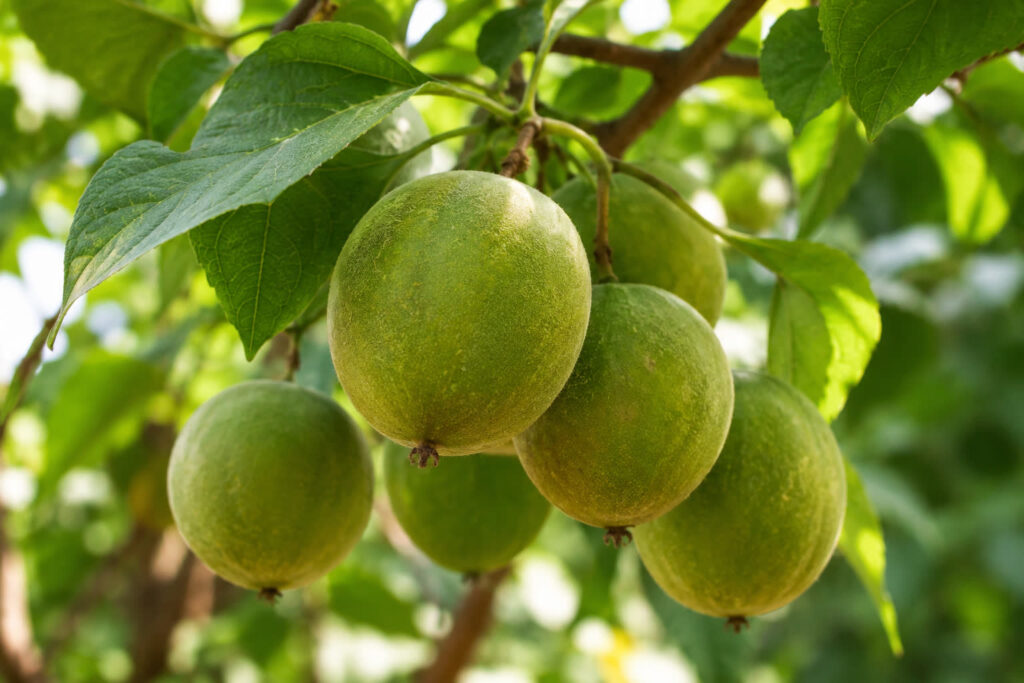
    Monk Fruit, also known as Luo Han Guo, is a fruit native to southern China. An extract is obtained from the fruit, and its sweet taste comes mainly from compounds called mogrosides.

    One of its most distinctive characteristics is its intensity. Depending on its concentration, Monk Fruit extract can be between 100 and 250 times sweeter than sugar, which means only a small amount is needed to add sweetness to food.

    This has made it increasingly common in products that seek to offer alternatives to conventional sugar, from beverages and desserts to chocolate.

    Why Is Monk Fruit Used in Sugar-Free Chocolate?

    Sugar plays an important role in traditional chocolate: it adds sweetness and helps balance the natural intensity of cacao.

    When creating sugar-free chocolate, another way of achieving that balance is needed.

    That is where alternatives such as Monk Fruit come in.

    Its intense sweetness makes it possible to add sweetness in small amounts while allowing cacao to remain at the center of the flavor profile.

    However, replacing sugar is not simply a matter of swapping one ingredient for another. When developing a chocolate bar, texture, intensity, cacao percentage, and the way different ingredients interact with one another must also be considered.

    That is why good sugar-free chocolate should aim for more than sweetness. It should provide an enjoyable experience from the first aroma to the final bite.

    What Does Monk Fruit Taste Like?

    A common question when trying a sweetener other than sugar is whether it will completely change the flavor of the product.

    Monk Fruit has an intense sweetness, but the final result depends on its concentration and the other ingredients it is paired with.

    In chocolate, one of the challenges is making sure the sweetener complements the cacao without overpowering its natural characteristics.

    This becomes even more important when working with fine flavor cacao, whose profile can include fruity, floral, nutty, and other distinctive notes worth preserving.

    In a well-balanced chocolate bar, the goal should not be for the sweetener to be the first thing you notice, but rather for you to enjoy the cacao and all the flavors that make up the experience.

    Is Monk Fruit an Alternative for People Looking to Reduce Their Sugar Intake?

    Monk Fruit is one of the sugar substitutes used as an alternative sweetener in different foods and beverages.

    However, this does not automatically mean that every product made with Monk Fruit can be consumed without considering portion sizes or individual needs.

    Every chocolate has a different formulation.

    For this reason, if someone is monitoring their sugar intake due to a health condition or personal choice, it is important to review the product’s nutritional information and consider their individual needs.

    The sweetener is only one part of the recipe.

    What Should You Look for When Choosing Sugar-Free Chocolate?

    When comparing different chocolate bars, there is more to consider than simply whether the package says “sugar-free.” Other factors can help you better understand what you are choosing.

    Cacao percentage: this tells you how prominent cacao-derived ingredients are within the chocolate bar.

    Ingredient list: this allows you to identify what the chocolate is sweetened with and what other ingredients are included in the recipe.

    Serving size: nutritional information is based on a specific quantity of the product.

    Origin of the cacao: where cacao comes from can have a significant influence on the aromas and flavors you experience.

    Choosing chocolate can also be an opportunity to better understand what you are consuming.

    Monk Fruit and Fine Flavor Cacao: CORA’s Approach

    At CORA, we believe that enjoying chocolate also means discovering new ways to experience Ecuadorian cacao.

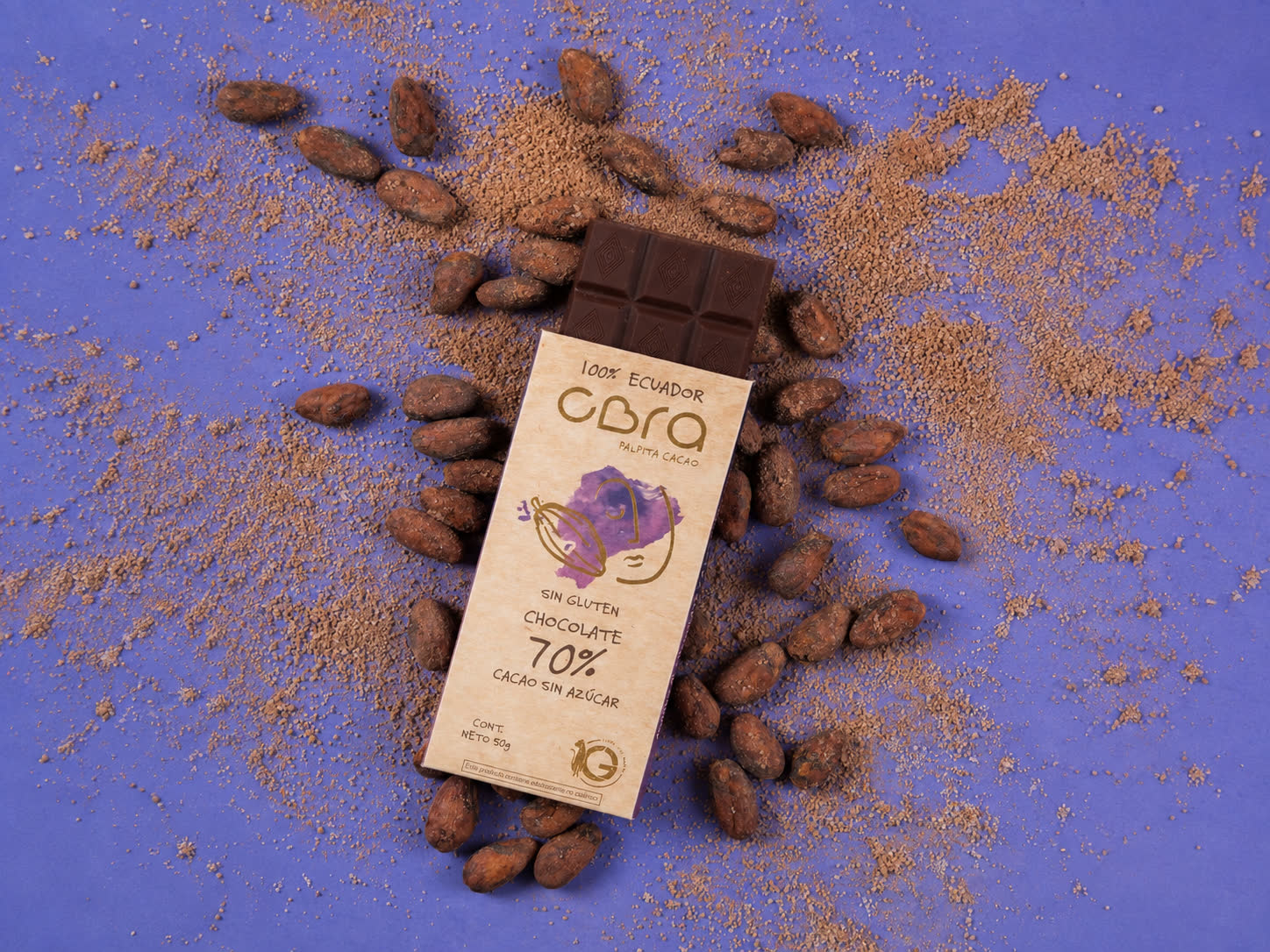
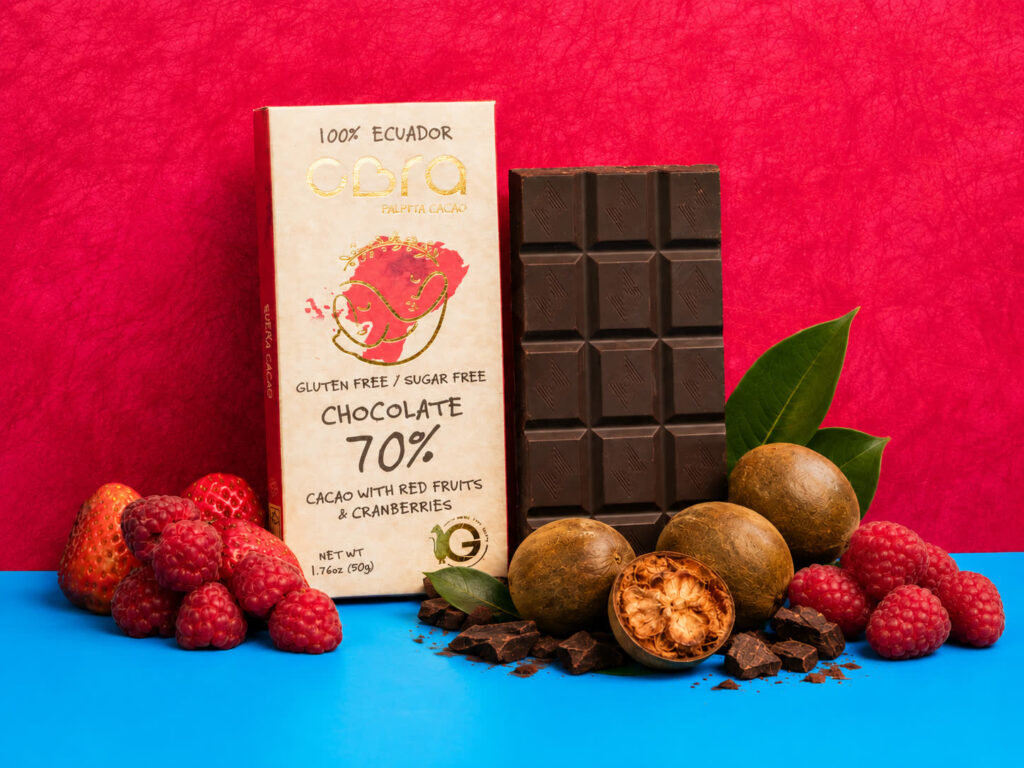
    Our 70% cacao chocolate line is made with fine flavor cacao from Esmeraldas and sweetened with Monk Fruit and Allulose, instead of the sugar traditionally used in other formulations.

    The goal is to keep cacao at the center of the experience.

    The cacao used in these bars can reveal fruity notes reminiscent of banana, red berries, and citrus, alongside nutty and floral nuances.

    Choosing sugar-free chocolate, therefore, does not mean giving up a rich and flavorful experience.

    It means discovering it from a different perspective.

    A Different Way to Enjoy Chocolate

    Monk Fruit is one example of how the world of chocolate continues to evolve.

    Today, we can find chocolate bars that combine fine flavor cacao, different cacao percentages, and alternatives to sugar to create experiences designed for different preferences.

    But when choosing a chocolate bar, what matters most is looking at the product as a whole: its cacao, ingredients, origin, nutritional information, and, of course, its flavor.

    Because a good chocolate bar is not defined only by what it does not contain.

    It is also defined by everything it has to offer.

    Discover CORA’s sugar-free chocolate and experience Ecuadorian cacao through a new way of sweetening every bite.

  • Dark Chocolate from Ecuador: What Sets CORA’s Bars Apart

    Dark Chocolate from Ecuador: What Sets CORA’s Bars Apart

    When we talk about dark chocolate from Ecuador, the cacao percentage is only part of the story. Behind every bar there’s an origin, a bean type, traceability, and a series of decisions that turn that raw material into a concrete flavor experience.

    Ecuador has a particular relationship with cacao. Its geographic diversity makes it possible to find sensory profiles ranging from fruity to floral to toasted, far beyond the intense flavor we usually associate with dark chocolate. At CORA, that richness is the starting point for everything we do.

    What makes Ecuadorian dark chocolate special?

    Good dark chocolate lets cacao take center stage. The more present it is within a bar, the easier it becomes to perceive its aroma, intensity, and the different flavors it reveals as you enjoy it.

    But not all cacao tastes the same. Origin, growing conditions, and harvest and post-harvest processes directly shape its sensory profile. The International Cocoa Organization defines fine cacao as one with a complex, balanced profile and identifiable aromatic notes that depend on genetics, growing environment, and bean handling. Ecuador, in fact, is among the world’s leading exporters of fine flavor cacao.

    That’s why talking about dark chocolate from Ecuador is also talking about place. If you want to go deeper on this, you can read our article on what fine flavor cacao is and why Ecuador is recognized worldwide.

    Fine flavor cacao: the starting point of a CORA bar

    CORA bars are made with fine flavor cacao sourced from Ecuadorian farms, with raw material selected from regions such as Esmeraldas, Puerto Quito, and Tena. Each origin contributes distinct characteristics, and choosing where the cacao comes from matters just as much as deciding the bar’s final percentage. This direct work with local producers is also at the heart of our story on sustainable chocolate in Ecuador and how we give back to small producers.

    In our 70% cacao chocolate line, for example, the cacao comes from Esmeraldas. Its profile often reveals fruity notes reminiscent of banana, red berries, and citrus, along with hints of nuts and floral touches, all carried by a smooth texture in the mouth.

    That’s one of the great appeals of fine flavor cacao: it turns a chocolate bar into an experience that unfolds gradually, flavor after flavor.

    70% cacao: intensity without losing the origin

    Dark chocolate tends to be immediately associated with a strong, even bitter flavor. But a high cacao percentage doesn’t have to mean a flat experience. In a well-balanced bar, 70% cacao lets the origin come through while intensity coexists with other nuances, rather than overpowering them.

    That’s exactly what our pure 70% cacao chocolate line is after: giving Ecuadorian cacao the spotlight and letting its aromatic profile be central to every bite. This line is also made without sugar and sweetened with monk fruit and allulose, a different formulation from chocolate sweetened with refined sugar. If you’re curious how these benefits go beyond flavor, on the blog we take a deeper look at the benefits of cacao chocolate.

    The result is a bar where cacao remains, without competition, the star.

    From origin to bar: why traceability matters

    When we choose a chocolate, we rarely think about everything that happened before it reached our hands. Yet knowing where the cacao comes from completely changes how we understand what we’re eating.

    At CORA we work with cacao from local farms and prioritize the traceability of our raw material, respecting its origin and staying transparent about the journey behind every bar. That traceability connects the bar to something bigger: the producing communities, the particularities of each territory, and the work that makes it possible to turn a fruit grown in Ecuador into chocolate.

    Origin shouldn’t just be a word on the packaging. It should be felt in the product, as we explain in what makes true artisanal chocolate special.

    Flavors that also tell an Ecuadorian story

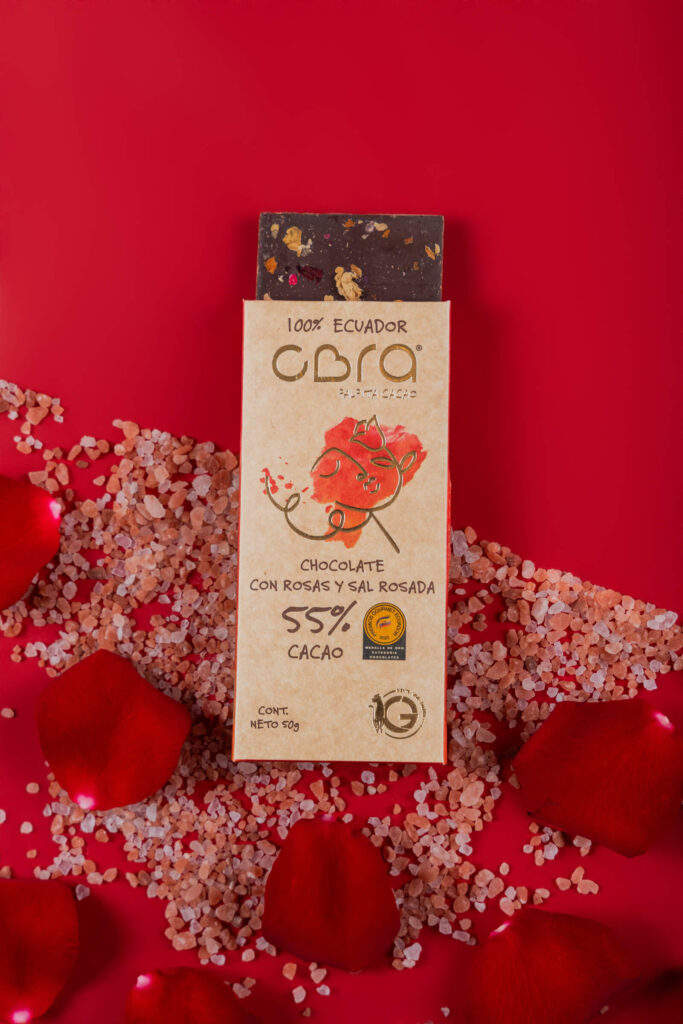
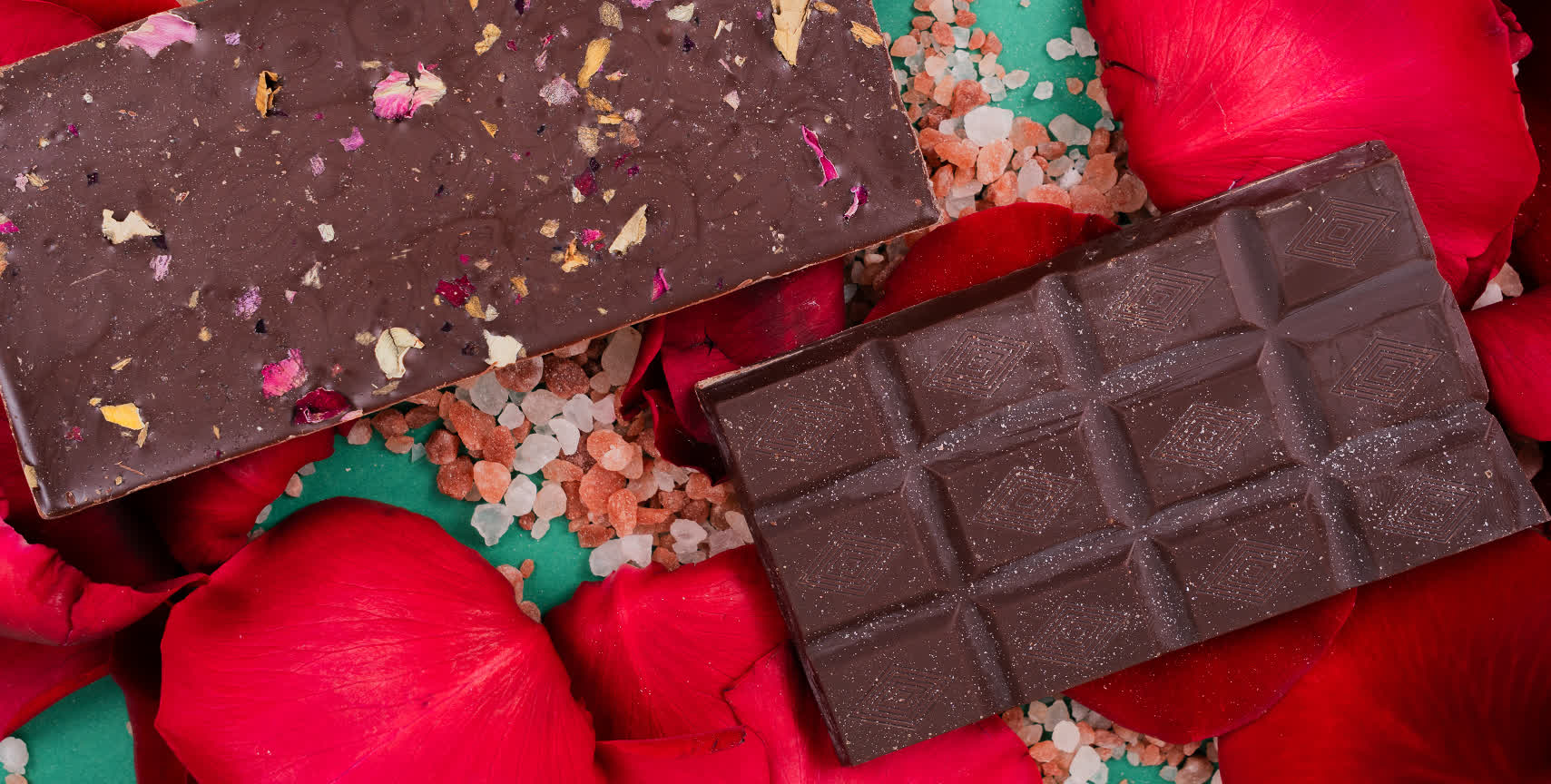
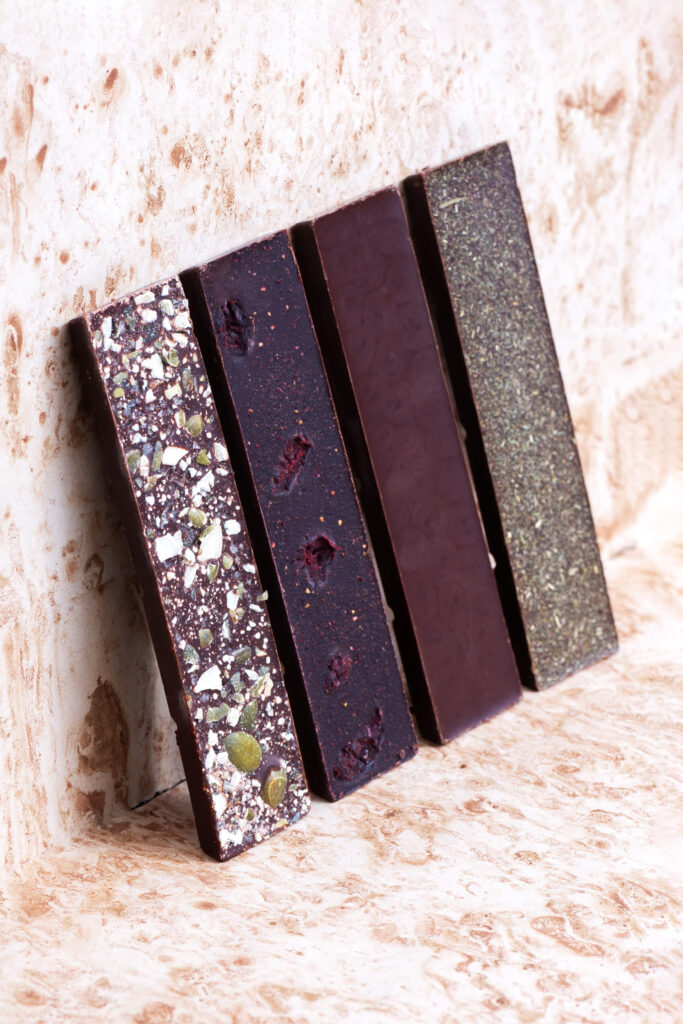
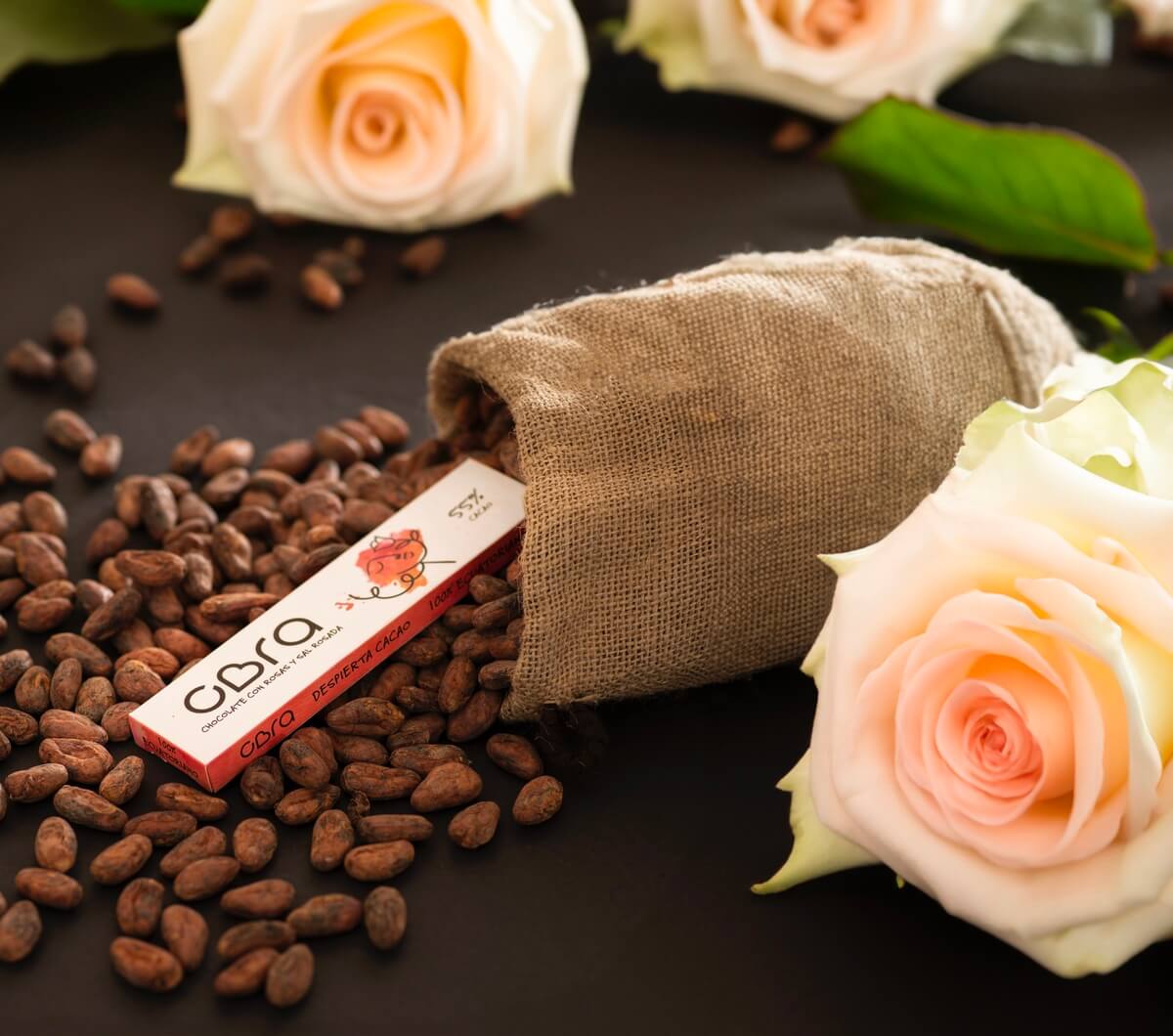
    Cacao is the star, but it isn’t alone. Part of CORA’s identity comes from combining fine flavor cacao with ingredients and flavors that evoke different traditions and places across Ecuador: red berries, rose and pink salt, fig and panela, or options where cacao stands practically on its own.

    Each combination is a different way to discover the same raw material. And although every bar has its own personality, they all share something: Ecuadorian cacao as the starting point. That’s the difference between simply eating a chocolate bar and exploring it, paying attention to its aromas, contrasts, and textures.

    Ecuadorian chocolate with purpose

    What sets CORA apart doesn’t end with flavor. The brand was born in Ecuador with the idea of turning chocolate into a way to support causes that create real impact. Part of that purpose is connected to Jardín Alado, dedicated to wildlife conservation in Ecuador, and to Corre La Voz, an initiative that drives women’s empowerment through chocolate.
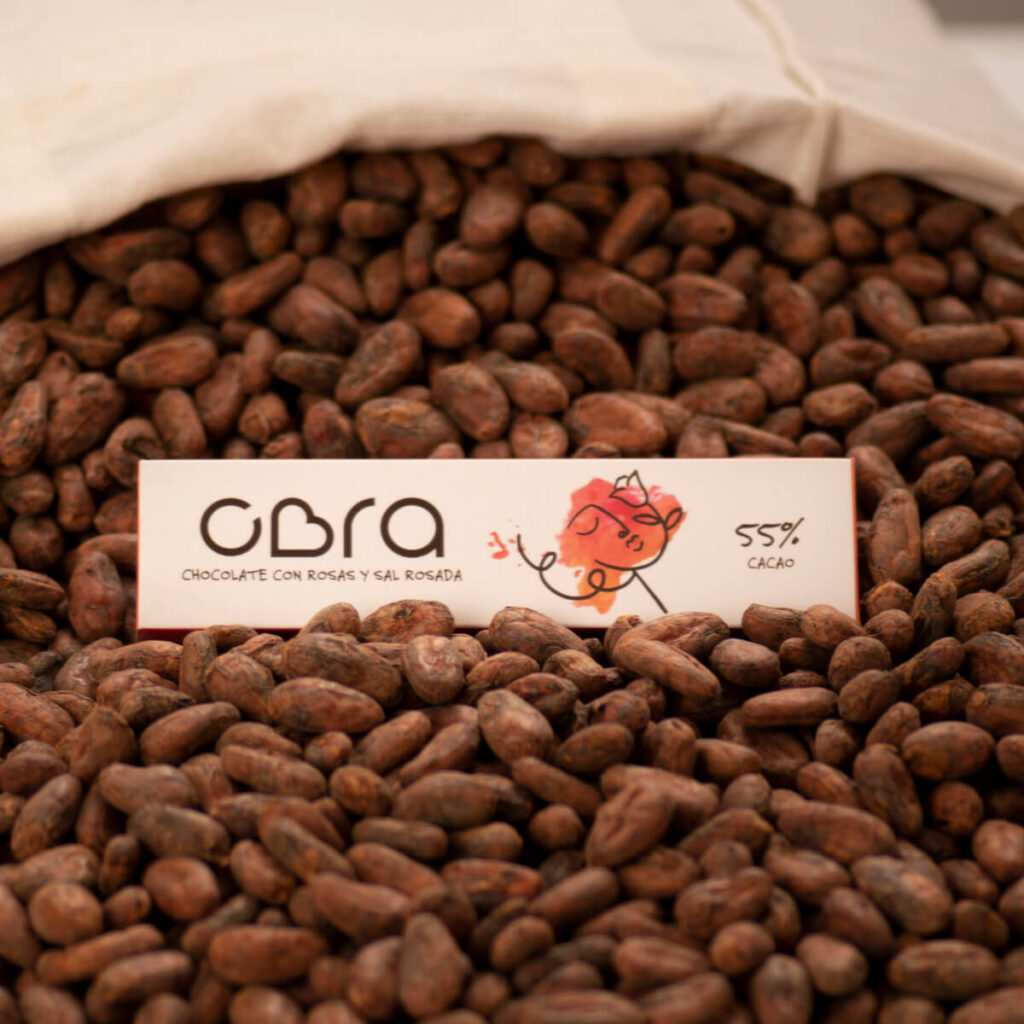
    Behind a CORA bar there’s more than cacao, ingredients, and design: there’s a decision about what product to create, which raw materials to value, and which stories are worth supporting.

    How to better enjoy a dark chocolate from Ecuador

    Next time you have a bar in front of you, take a moment before biting into it. Look at it, break off a small piece, and listen to the sound. Bring it close and take in its aromas. Let it melt slowly in your mouth and notice how the flavor changes: does cacao come through first? Are there fruity notes? Something floral or toasted?

    There’s no single right answer. That’s precisely the charm of a dark chocolate made with fine flavor cacao: every person discovers something different in the same bar.

    CORA: a piece of Ecuador in every bar

    What sets CORA’s bars apart isn’t a single ingredient, but the combination of Ecuadorian fine flavor cacao, origin, traceability, flavors with identity, and purpose.

    Chocolate begins long before you open the wrapper: it begins in the soil, with the people who grow the cacao, and in every decision that preserves its character all the way to the bar. Choosing dark chocolate from Ecuador, then, is also a way of getting to know the country from another angle: one aroma, one flavor, and one piece of our land at a time.

  • Sustainable Chocolate in Ecuador: How CORA Gives Back to Small Producers

    Sustainable Chocolate in Ecuador: How CORA Gives Back to Small Producers

    Ecuador is recognized worldwide for the quality of its fine aroma cacao, an ingredient that is part of the country’s agricultural, cultural, and gastronomic identity. However, behind every chocolate bar there is a value chain that begins long before the final packaging: it starts with the work of small producers who grow, harvest, and care for cacao at its origin.

    At CORA, we believe that sustainable chocolate in Ecuador should stand out not only for its flavor, but also for the positive impact it creates in communities, local commerce, and the way we value the work of those who make this product possible.

    The True Origin of Chocolate: The Work of Producers

    Every chocolate begins in the field. Small cacao producers are the ones who understand the land, the harvest cycles, and the care needed to obtain high-quality beans. Their work not only influences the final flavor of the chocolate, but also helps preserve agricultural practices that are part of Ecuador’s history.

    That is why talking about sustainable chocolate means recognizing the role of those at the first stage of the value chain. Giving back to small producers means valuing their experience, supporting more responsible commercial relationships, and promoting an industry where product quality is also connected to the well-being of communities.

    What Does Sustainable Chocolate Mean in Ecuador?

    Sustainable chocolate is not only about using good ingredients. It also means making conscious decisions at every stage of the process: from cacao selection to production, packaging, and the relationship with everyone involved in the value chain.

    In Ecuador, this vision is especially important because cacao is not just a raw material. It is a product with history, origin, and cultural value. When a brand commits to sustainability, it also helps Ecuadorian cacao be recognized not only for its quality, but also for the responsible way it is produced and shared with the world.

    How CORA Contributes to a More Responsible Value Chain

    CORA was created with the purpose of making high-quality Ecuadorian chocolate that reflects the richness of the country and strengthens local business. This approach connects the final product with a broader vision: building a model where chocolate generates value for more people.

    Through careful ingredient selection, work with suppliers aligned with quality standards, and a commitment to responsible practices, CORA seeks to make every bar represent more than a flavor experience. It represents a way to support a production chain that recognizes the origin of cacao and the importance of those who cultivate it.

    Giving Back Also Means Creating Visibility

    One of the most important ways to give back to small producers is by telling their story. Many times, consumers enjoy a chocolate bar without knowing the full process behind it: planting, harvesting, fermentation, drying, selection, and the care given to each cacao bean.

    Creating visibility for this work helps build a more conscious relationship between producers and consumers. When someone chooses Ecuadorian chocolate with purpose, they are also supporting a more responsible way of consuming, one that recognizes the human and cultural value behind every ingredient.

    Sustainability, Quality, and Purpose

    For CORA, sustainability is not an isolated concept. It is connected to cacao quality, respect for origin, and the desire to create a product that represents the best of Ecuador. Sustainable chocolate should care for the consumer experience, but it should also look back and recognize the chain that makes it possible.

    That is why choosing sustainable chocolate in Ecuador is a way to support small producers, strengthen local commerce, and promote a fairer, more conscious industry connected to its territory.

    Chocolate with a Positive Impact

    Every CORA bar seeks to tell a story: the story of Ecuadorian cacao, its producers, and a country with unique natural and cultural richness. By choosing products made with purpose, consumers also become part of this impact.

    If you would like to discover unique flavors made with fine aroma cacao, explore the CORA chocolate collection and learn more about the origin behind every bar.

    And if you are interested in sharing CORA with your community or business, visit our contact page to learn more about becoming a distributor.

  • What Is Fine Aroma Cacao and Why Is Ecuador Recognized Worldwide?

    What Is Fine Aroma Cacao and Why Is Ecuador Recognized Worldwide?

    Talking about Ecuadorian chocolate means talking about origin, tradition, and flavor. But it also means talking about one of the most special ingredients in the world: fine aroma cacao.

    This type of cacao is not recognized only by its name, but by everything it represents. Its aromas, delicate notes, history, and the way it is grown have helped Ecuador earn an important place in the world of premium chocolate.
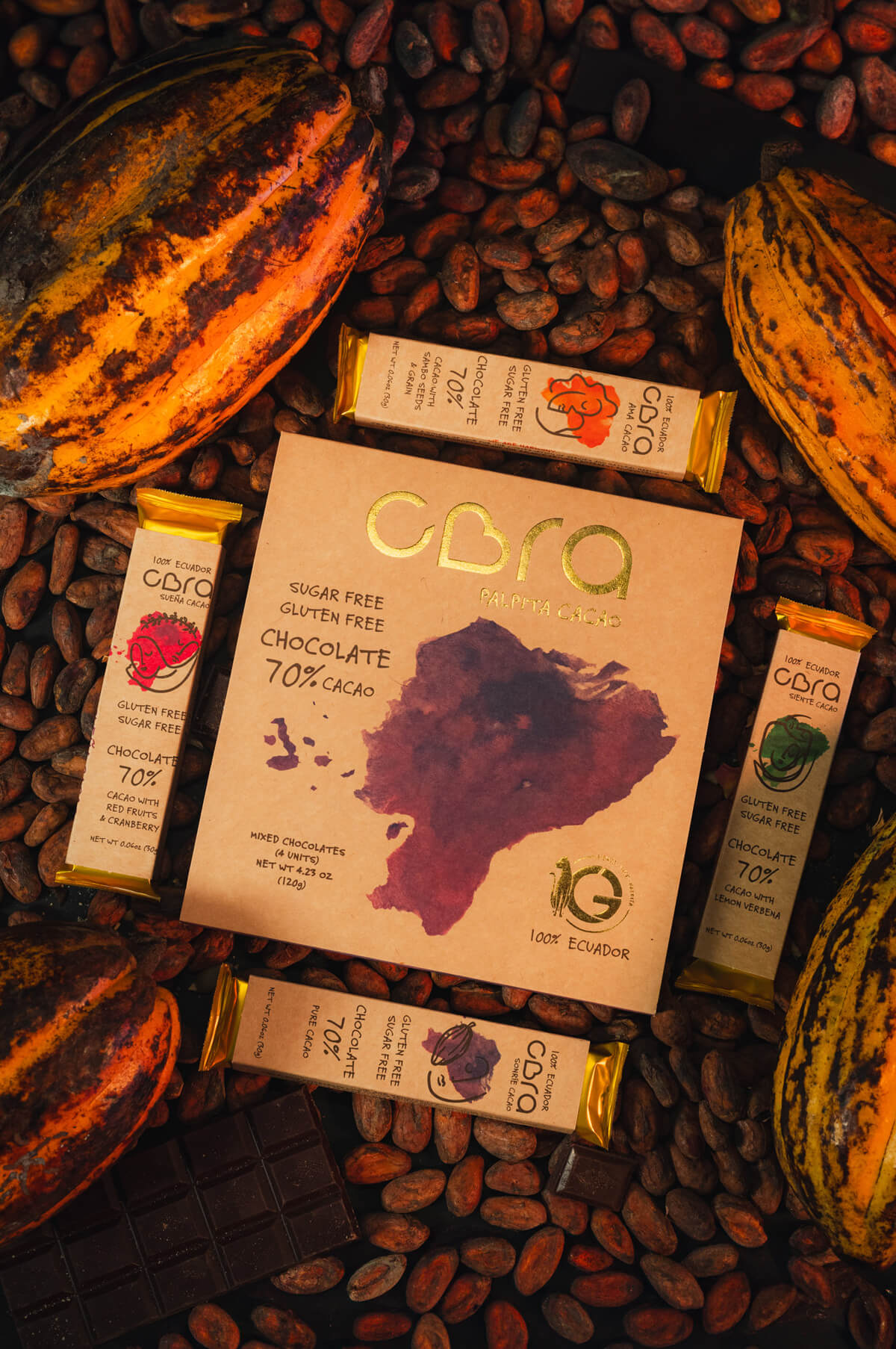
    At CORA, we believe that every bar begins long before the first bite. It begins in the land, in the hands of local producers, and in a cacao that carries the identity of our country.

    What is fine aroma cacao?

    Fine aroma cacao is a type of cacao valued for its sensory profile. Unlike common cacao, it is not defined only by intensity, but by the richness of its aromas and flavors.

    It can have floral, fruity, toasted, sweet, or slightly herbal notes. Each of these characteristics depends on the origin of the cacao, the climate, the soil, the harvest, and later processes such as fermentation and drying.

    That is why fine aroma cacao is not just a raw ingredient. It is an ingredient with its own personality. A cacao that allows the creation of more expressive, balanced chocolates full of unique nuances.

    Ecuador and its connection with cacao

    Ecuador has a deep relationship with cacao. For generations, this fruit has been part of the country’s agricultural, cultural, and economic history. Its producing regions have given life to cacao recognized for its quality and its ability to tell stories through flavor.

    Ecuadorian cacao grows in different regions, and each one brings different characteristics. The land, humidity, altitude, and climate all influence the final result. That is why a chocolate bar made with Ecuadorian cacao can feel different depending on its origin.

    That diversity is part of what makes premium Ecuadorian chocolate so special. It is not only about producing cacao, but about preserving its identity from the field to the bar.

    Why is Ecuador recognized worldwide?

    Ecuador is recognized worldwide because its fine aroma cacao has a special quality. Its flavor profiles are valued by chocolatiers, brands, and chocolate lovers who seek more authentic and less industrial experiences.

    Ecuadorian cacao can offer more complex and delicate flavors. That is why it is used in premium chocolates, origin bars, and products that seek to highlight the true character of cacao.

    But this recognition does not come only from flavor. It also comes from the work of local producers, careful processes, and a tradition that has kept the value of cacao alive as part of Ecuadorian identity.

    The hands behind fine aroma cacao

    Behind every cacao bean, there are people. Producers who know the land, care for the harvest, and understand that quality begins at the origin.

    The way cacao is grown, harvested, fermented, and dried directly influences the final flavor of chocolate. That is why the work of local producers is essential for fine aroma cacao to preserve its best qualities.
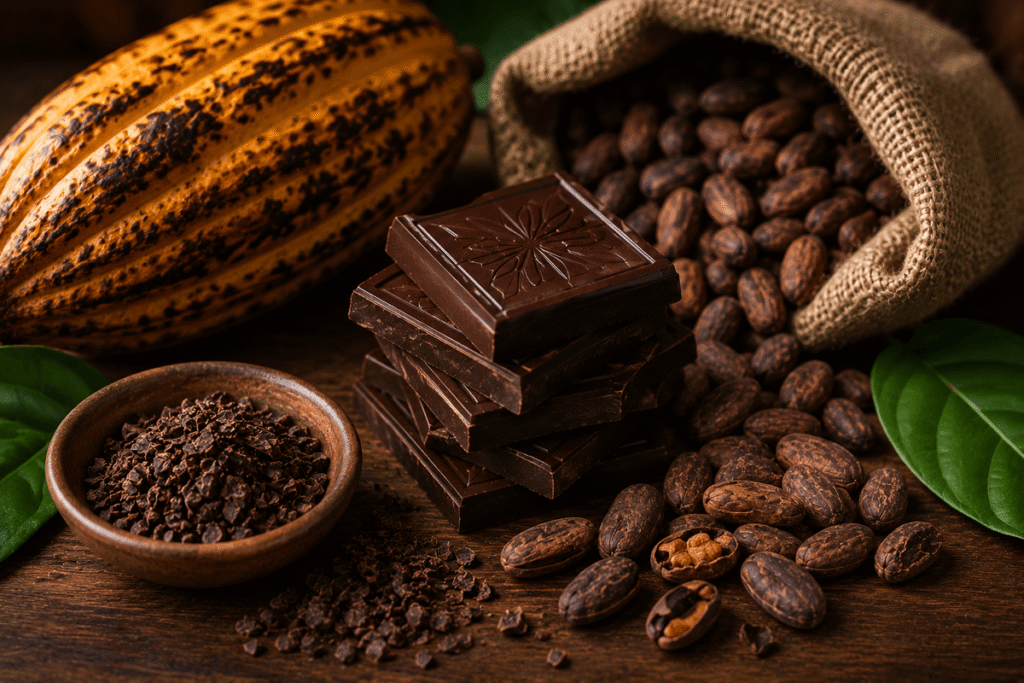
    When you choose chocolate made with Ecuadorian origin cacao, you are also valuing that chain. You are recognizing the work of those who make it possible for cacao to reach your hands as a special experience.

    Fine aroma cacao and premium chocolate

    Premium chocolate is not defined only by its presentation. It is defined by the quality of the cacao, the respect for the process, and the intention behind its creation.

    Fine aroma cacao makes it possible to create chocolates with greater depth. Chocolates that do not need to hide their flavor, but instead reveal it. Each bar can express different notes and offer a more authentic tasting experience.

    At CORA, fine aroma cacao is an essential part of our identity. It is the starting point for creating chocolates that connect with origin, with Ecuador, and with a more conscious way of enjoying chocolate.

    An experience with Ecuadorian identity

    Tasting chocolate made with Ecuadorian fine aroma cacao is a way to connect with the country through flavor. It is discovering a story that begins in the land, passes through expert hands, and reaches a bar created to be enjoyed slowly.

    Each bite can be an invitation to recognize what is ours: local work, Ecuador’s natural richness, and the ability to transform a fruit into a premium experience.

    At CORA, we believe chocolate can be much more than something sweet. It can be a gift, a moment, a connection, and a way to share the best of our origin.

    Live the CORA experience

    Fine aroma cacao is one of the reasons why Ecuador is recognized around the world. But for us, it is also a way to tell a story with purpose.

    If you would like to discover unique flavors made with fine aroma cacao, explore the CORA chocolate collection and learn more about the origin behind every bar.

    And if you are interested in sharing CORA with your community or business, visit our contact page to learn more about becoming a distributor.

  • Ecuadorian Chocolate: Why It’s Recognized Around the World

    Ecuadorian Chocolate: Why It’s Recognized Around the World

    Talking about ecuadorian chocolate means talking about origin, aroma, and a tradition that has crossed borders. For years, Ecuadorian cacao has been internationally recognized for its quality and unique sensory profile, becoming one of the most valued ingredients in the world of artisan and premium chocolate.

    But what makes Ecuadorian chocolate so special? The answer lies in the cacao, the land where it grows, and the stories behind every chocolate bar.

    Fine Aroma Cacao: The Heart of Ecuadorian Chocolate

    Ecuador is recognized as one of the world’s leading producers of fine aroma cacao. This type of cacao is known for its more complex sensory profiles, with floral, fruity, and roasted notes that set it apart from commercial cacao varieties.

    Fine aroma cacao is not simply meant to add sweetness. It is meant to express identity, terroir, and experience in every bite.

    That is why many premium chocolate brands around the world use Ecuadorian cacao as the foundation of their products.

    What Makes Ecuadorian Chocolate Different?

    Ecuadorian chocolate stands out for many reasons beyond flavor alone.

    1. The Origin of the Cacao

    Ecuador’s climate allows cacao to grow in regions rich in biodiversity and natural beauty. These growing conditions directly influence the aroma and complexity of the cacao.

    Each region contributes unique characteristics to the chocolate’s flavor profile, making every bar slightly different.

    2. The Quality of Fine Aroma Cacao

    Ecuadorian fine aroma cacao is internationally recognized for its smoothness, aroma, and natural balance.

    Its quality has helped position Ecuador as a global leader in the premium chocolate industry.

    3. The Value of Artisan Craftsmanship

    True artisan chocolate respects the natural character of cacao. From ingredient selection to the production process, every detail influences the final result.

    Because of this, artisan Ecuadorian chocolate often offers more authentic, less standardized, and far more memorable flavors.

    Chocolate with Ecuadorian Identity

    At CORA, chocolate is not only born from cacao. It is also inspired by the flavors, ingredients, and experiences that are part of Ecuador.

    That is why every bar combines fine aroma cacao with ingredients connected to Ecuadorian identity, creating unique and personality-filled experiences.

     It is also inspired by the flavors, ingredients, and experiences that are part of Ecuador.

    Flavors like passion fruit, figs with panela, berries, and lemongrass invite people to discover new ways of enjoying Ecuadorian chocolate.

    More Than Chocolate: An Experience with Purpose

    Chocolate can also become a way to create positive impact.

    At CORA, we believe every bar can connect flavor, origin, and purpose. That is why our chocolate supports initiatives that generate social and environmental impact, showing that Ecuadorian cacao can also become a tool for change.

    Choosing artisan Ecuadorian chocolate is not only choosing quality. It is also supporting more conscious processes that stay closely connected to origin.

    The Global Recognition of Ecuadorian Chocolate

    Today, Ecuadorian cacao is used by renowned chocolatiers and chocolate brands around the world because of its exceptional quality and aromatic profile.

    International organizations have repeatedly recognized Ecuadorian fine aroma cacao as one of the best in the world, helping establish Ecuador as a leader in the premium chocolate industry.

    How to Recognize High-Quality Ecuadorian Chocolate

    If you want to enjoy a more authentic chocolate experience, look for chocolates that:

    • Use Ecuadorian fine aroma cacao
    • Clearly highlight the cacao’s origin
    • Use high-quality ingredients
    • Maintain artisan production processes
    • Focus on showcasing the natural flavor of cacao

    A great Ecuadorian chocolate does not hide the cacao. It makes it the star.

    Discover the Flavor of Ecuadorian Cacao

    Every chocolate bar tells a story. At CORA, that story begins with Ecuadorian cacao and ends with an experience designed to be enjoyed slowly.

    If you would like to discover unique flavors made with fine aroma cacao, explore the CORA chocolate collection and learn more about the origin behind every bar.

    And if you are interested in sharing CORA with your community or business, visit our contact page to learn more about becoming a distributor.

  • Cacao Chocolate: What Makes True Artisan Chocolate Special?

    Cacao Chocolate: What Makes True Artisan Chocolate Special?

    When we talk about cacao chocolate, we are talking about much more than just something sweet. We are talking about origin, aroma, texture, patience, and a different way of experiencing chocolate. True artisan chocolate begins with respect for cacao and for everything that happens before a chocolate bar reaches your hands

    At CORA, chocolate starts long before the first bite. It begins in the land, with Ecuadorian fine aroma cacao and with the decision to create an experience that combines flavor, identity, and purpose.

    What Does “Cacao Chocolate” Really Mean?

    Although we often use the word “chocolate” to describe any product with a cacao flavor, not all chocolate offers the same quality or tells the same story.

    Cacao chocolate stands out because it places cacao at the center of the experience. This means the flavor does not rely only on sugar, milk, or artificial flavorings, but on the quality of the cacao bean, its origin, its process, and the way it is transformed into chocolate.

    In the case of fine aroma cacao, its value comes from its sensory profile. Depending on the region where it is grown and the care taken during production, it can reveal fruity, floral, roasted, or smooth notes.

    Origin Matters

    One of the elements that makes artisan chocolate special is the origin of the cacao. Ecuador is internationally recognized for its fine aroma cacao, a variety valued for its complexity, aroma, and exceptional quality.

    At CORA, origin is not just a beautiful detail. It is part of the identity behind every chocolate bar. Ecuadorian cacao allows the creation of chocolates with their own personality, where every percentage and ingredient combination tells a different story.

    pure chocolate

    That is why choosing chocolate made with origin cacao is about more than simply choosing a product. It is about choosing a more authentic, conscious, and meaningful experience.

    What Makes Artisan Chocolate Different from Commercial Chocolate?

    The main difference lies in the care behind the process. Artisan chocolate aims to respect the natural character of cacao, while many commercial chocolates prioritize mass production, standardized flavors, and formulas where cacao is not always the main ingredient.

    True artisan chocolate can often be recognized by:

    • A stronger cacao presence
    • Carefully selected ingredients
    • More intentional production processes
    • More defined and complex flavors
    • A connection to origin
    • A more sensory and less generic experience

    In other words, artisan chocolate is not meant to taste exactly the same every time. It is meant to express where it comes from.

    Fine Aroma Cacao: The Heart of Artisan Chocolate

    Fine aroma cacao is one of Ecuador’s greatest treasures. Its value comes from its natural aroma, complexity, and ability to create chocolates with deeper and more balanced flavors.

    That is why, at CORA, fine aroma cacao is not simply a raw ingredient. It is the starting point for creating chocolate bars that connect tradition with contemporary flavors, local identity with uniqueness, and enjoyment with purpose.

    Every bar is crafted so the cacao can shine while also blending with ingredients that represent memorable flavors and Ecuadorian identity.

    Chocolate with Purpose

    Every chocolate bar represents a way to contribute to initiatives that create impact, including wildlife conservation and female empowerment. Choosing CORA also means choosing a brand that understands chocolate as an experience with purpose.

    CORA was not created only to make chocolate. It was created to support meaningful causes.

    Artisan chocolate can already be delicious, but when it also carries purpose, it becomes something even more special.

    Experience CORA

    True artisan chocolate is meant to be enjoyed slowly. You look at it, break it, smell it, and savor it. Every detail matters because behind every bar there is origin, process, intention, and purpose.

    If you would like to experience cacao chocolate made in Ecuador with identity and heart, explore the CORA shop and discover its different flavors. And if you are interested in sharing CORA with your community or business, visit our contact page to learn more about becoming a distributor.